Tianyi Sensor IOT Technology Co., Ltd
Sales Manager:Ms. Emily Wang
Cel,Whatsapp,Wechat:+86 15898932201
Email:info@fengtutec.com
Add:No. 155 Optoelectronic Industry Accelerator, Gaoxin District, Weifang, Shandong, China


Sales Manager:Ms. Emily Wang
Cel,Whatsapp,Wechat:+86 15898932201
Email:info@fengtutec.com
Add:No. 155 Optoelectronic Industry Accelerator, Gaoxin District, Weifang, Shandong, China
time:2026-05-14 11:33:20 source:Weather Station viewed:194 time
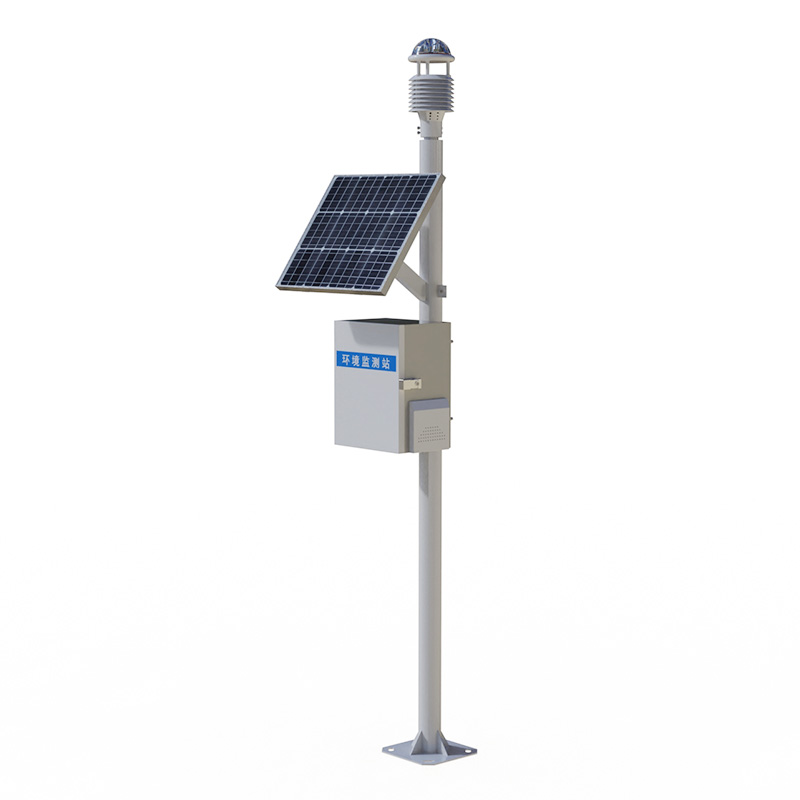
The intelligent meteorological system is a highly integrated, low-power, and quickly installable automatic meteorological observation device. It requires no debugging and can be deployed immediately. It is used for continuous data collection of elements such as temperature, humidity, wind speed, wind direction, air pressure, and precipitation, and widely serves meteorology, agriculture, environmental protection, airports and ports, and educational institutions.
The intelligent meteorological system is an integrated automatic meteorological observation device developed based on IoT sensors, edge computing, and modern communication technologies. The system adopts a modular design, highly integrating sensors for meteorological elements such as temperature, humidity, air pressure, wind speed, wind direction, and precipitation into a compact body. It features low power consumption, requires no debugging, and can be deployed quickly. Taking the typical QC8 intelligent meteorological monitoring system as an example, the entire device consists of five parts: meteorological sensors, data acquisition unit, solar power supply system, pole support, and cloud platform. Its static power consumption is less than 50 microamps, and it is equipped with MPPT automatic power point tracking solar charging management technology, allowing for long-term continuous operation without an external power source. In terms of data transmission, the system comes standard with GPRS networking and supports Bluetooth and wired routing extensions, enabling real-time uploading of collected data to a cloud platform or user server.
Regarding technical specifications, the intelligent meteorological system covers a temperature measurement range of -40℃ to 80℃, a humidity measurement range of 0 to 100%RH, a wind speed measurement range of 0 to 60 meters per second, a wind direction measurement range of 0 to 360 degrees, an atmospheric pressure measurement range of 300 to 1100 hPa, and a precipitation intensity monitoring range of 0-4 mm/min. The system's sampling frequency can be set according to user needs, typically recording data every 10 minutes to 1 hour in routine meteorological observations, and supports local storage of historical data and resume capability. The device provides over-limit alarms via SMS or platform push notifications, sending alarm information to designated mobile phones when monitored elements exceed preset thresholds.
The intelligent meteorological system is relatively easy to install and maintain. The equipment is factory-calibrated and parameter-configured; upon arrival at the site, only the matching bracket is needed for fixation. After connecting to solar power, the system automatically starts sampling and uploading, requiring no manual adjustments. The equipment supports remote parameter modification and firmware upgrades, allowing maintenance personnel to complete configuration adjustments without on-site visits. Thanks to its fully sealed and corrosion-resistant casing design, the equipment boasts an IP65 or higher protection rating and an operating temperature range of -40℃ to 85℃, making it suitable for harsh outdoor environments.
In practical applications, intelligent meteorological systems are widely used for intensive observation at meteorological stations, microclimate monitoring in agricultural fields, forest fire risk forecasting, real-time wind speed and direction warnings for ports and waterways, meteorological science education in schools, and temporary meteorological observations for scientific expeditions. Compared to traditional automatic weather stations, intelligent meteorological systems eliminate the complex wiring, debugging, and calibration processes, enabling single-station deployment within half an hour, making them particularly suitable for temporary monitoring and emergency meteorological support tasks. With the standardization of sensor technology and communication standards, these devices are gradually replacing some traditional automatic weather station models, becoming the mainstream choice for low-power, rapidly deployable meteorological observation.
Utilizing the forward-scattering method to measure the total atmospheric extinction coefficient and accurately calculate ambient visibility, this weather phenomenon sensor automatically identifies various weather conditions—such as fog, rain, and snow. Designed for outdoor applications like r...
The Portable Weather Station is a professional device specifically designed for environmental monitoring. It is not only easy to install and operate with straightforward instructions but also delivers highly accurate measurement data. As a reliable observation system, it can simultaneously monitor m...
The visibility meter uses the forward scattering method to calculate the total extinction coefficient of air, accurately acquiring atmospheric visibility data. The device is portable, durable, and features storable and transferable data, stable operation, and is suitable for atmospheric monito...
The Handheld Weather Station FT - SQ6+ takes "full - element monitoring + precise positioning + intelligent interconnection" as its core. It gives consideration to portability and professional performance. It not only meets the needs of mobile scenarios such as outdoor operations and emerg...


 Skype
Skype
 whatsapp
 mail
mail