Tianyi Sensor IOT Technology Co., Ltd
Sales Manager:Ms. Emily Wang
Cel,Whatsapp,Wechat:+86 15898932201
Email:info@fengtutec.com
Add:No. 155 Optoelectronic Industry Accelerator, Gaoxin District, Weifang, Shandong, China


Sales Manager:Ms. Emily Wang
Cel,Whatsapp,Wechat:+86 15898932201
Email:info@fengtutec.com
Add:No. 155 Optoelectronic Industry Accelerator, Gaoxin District, Weifang, Shandong, China
time:2026-05-11 11:27:26 source:Weather Station viewed:210 time
This fully automated online hydrological monitoring device, based on K-band planar radar technology, can simultaneously measure water level, flow velocity, flow rate, and rainfall. Employing a non-contact measurement method, it is unaffected by silt and sewage corrosion. Its built-in intelligent algorithm calculates cross-sectional flow and cumulative flow, making it suitable for data acquisition and remote early warning in scenarios such as rivers, irrigation canals, reservoirs, and urban flood control.
The integrated hydrological and water level monitoring device integrates water level, flow velocity, flow rate, and rainfall monitoring functions into a single device, primarily targeting automated monitoring of hydrological and water conservancy scenarios such as rivers, lakes, reservoir gates, and urban flooding. Based on K-band planar microstrip array radar technology, the sensor emits high-frequency electromagnetic waves towards the water surface. After receiving the reflected signals, it simultaneously calculates the water level and surface flow velocity. The built-in microprocessor then calculates the instantaneous cross-sectional flow and cumulative flow based on user-preset cross-sectional geometric parameters, completing the synchronous acquisition of four core hydrological parameters: water level, flow velocity, flow rate, and rainfall.
The non-contact measurement characteristics of the integrated water level and water condition monitoring device constitute a significant technological advantage. The radar probe is installed above the water body and fixed by existing structures such as brackets, bridges, or embankments, without direct contact with the water. Therefore, it is unaffected by sewage corrosion, siltation, and aquatic weed entanglement, maintaining stable measurement accuracy even during long-term operation in water bodies with high sediment content and high corrosiveness. The radar sensor employs a planar microstrip array antenna design, resulting in concentrated energy and low power consumption. The overall power consumption of the device is kept low, allowing it to be powered by solar panels and a battery pack, enabling long-term continuous operation in unattended field conditions. The device can independently connect to urban water, sewage, and environmental automatic monitoring systems, is compatible with the standard Modbus-RTU communication protocol, and uploads collected data to a backend monitoring platform via an RS485 digital interface or a 4G wireless module. Management personnel can view real-time trends in water level and flow velocity and receive abnormal alarm information on the platform.
In terms of structural design, this type of equipment adopts a highly integrated approach. Taking the portable hydrological emergency monitoring all-in-one device as an example, this product integrates a water level gauge, rain gauge, camera, and telemetry terminal into one compact and portable unit. On-site installation is quick and simple. The power supply system uses a high-performance lithium battery, providing 7 to 10 days of uninterrupted operation. In terms of communication, it supports GPRS/4G full network connectivity and dual-channel redundancy configuration with BeiDou satellite. When the primary communication network is interrupted, it automatically switches to the backup channel, solving the 36-hour communication blind spot problem after a natural disaster and ensuring stable transmission of hydrological information. Regarding monitoring accuracy, water level measurement accuracy can reach 0.2%FS, rainfall resolution can be as low as 0.1 mm, flow velocity measurement range is 0.1 to 20 m/s with a measurement accuracy of ±0.01 m/s, water level measurement range is 0 to 30 meters, and the radar's effective detection distance from the water surface can reach up to 40 meters.
From a practical application perspective, the hydrological and water level monitoring all-in-one device has been deployed on a large scale in river hydrological monitoring, irrigation area water measurement, urban drainage network monitoring, and emergency monitoring of sudden floods. In irrigation district water measurement scenarios, the equipment is installed at key sections of irrigation canals to monitor water levels and flow rates in real time. The data is uploaded to a water management platform for canal water allocation scheduling and water resource metering. In urban flood control, the equipment is deployed in underground stormwater networks or low-lying road sections to monitor water level changes in real time. When the water level reaches a preset warning value, it sends an early warning to the flood control command system, allowing for timely emergency response. During sudden rainstorms, floods, mudslides, or landslide-dammed lakes, portable monitoring devices can be quickly deployed to the site to establish temporary hydrological monitoring stations, providing real-time water level and rainfall data to the command center and supporting disaster relief decision-making.
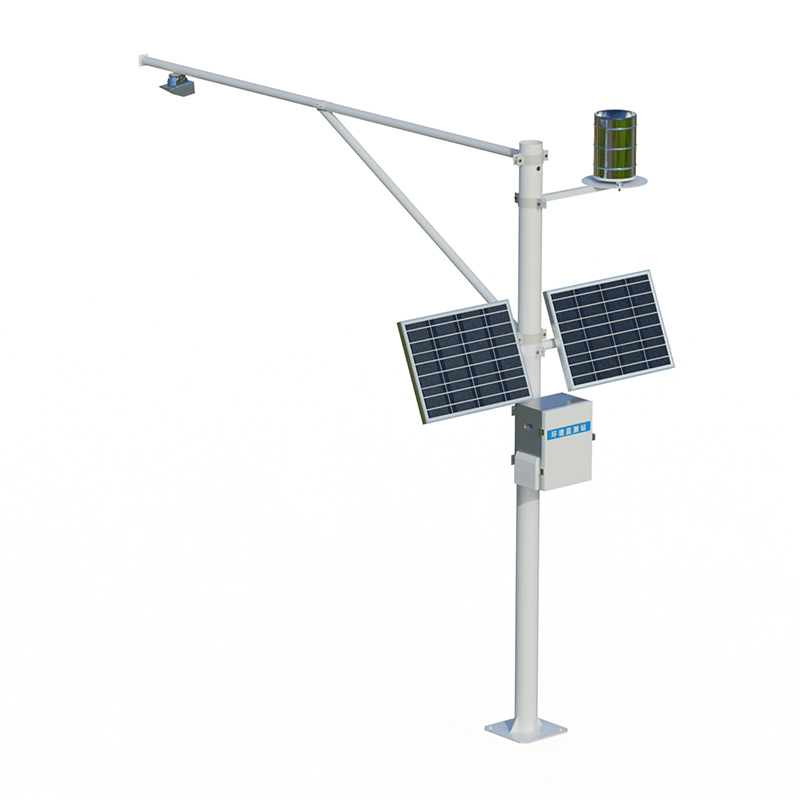
The wireless transmission technology of Multiparameter Weather Sensors enables remote real-time transmission of meteorological data through communication methods such as LoRa, ZigBee, and GPRS. Traditional wired sensors suffer from cumbersome cabling, which limits installation locations. In contrast...
The 7-element miniature sensor includes monitoring modules for temperature, humidity, air pressure, illumination, wind speed, wind direction, etc., with a mounting bracket customized according to the street lamp structure. It can be installed at a rain-proof and ventilated position in the upper midd...
This IoT-enabled water quality monitoring micro-system integrates flow stabilization and venting, sensors, control, and communication units. It can detect indicators such as residual chlorine, pH, and turbidity online, supports cloud data viewing, and is suitable for scenarios such as municipa...
Smart weather station is a highly integrated, low-power, and rapidly deployable automatic meteorological observation device. It can perform real-time and precise monitoring of wind speed, wind direction, temperature, humidity, atmospheric pressure, PM2.5, PM10, and noise, and features IoT clou...


 Skype
Skype
 whatsapp
 mail
mail