Tianyi Sensor IOT Technology Co., Ltd
Sales Manager:Ms. Emily Wang
Cel,Whatsapp,Wechat:+86 15898932201
Email:info@fengtutec.com
Add:No. 155 Optoelectronic Industry Accelerator, Gaoxin District, Weifang, Shandong, China


Sales Manager:Ms. Emily Wang
Cel,Whatsapp,Wechat:+86 15898932201
Email:info@fengtutec.com
Add:No. 155 Optoelectronic Industry Accelerator, Gaoxin District, Weifang, Shandong, China
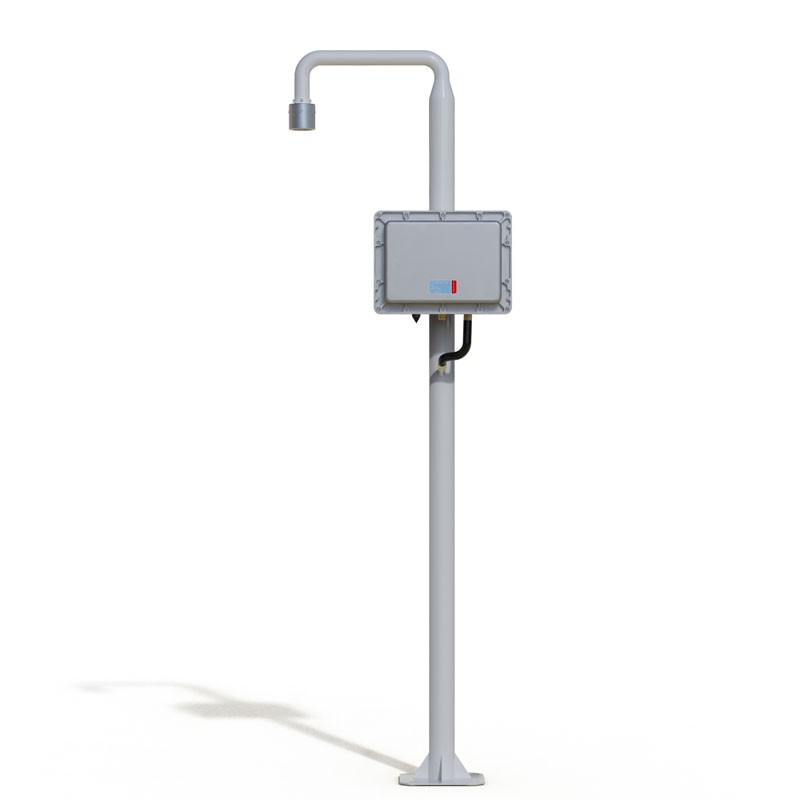
Model:FT-LD2
Brand:tianyi
1、Explosion-proof Lightning Warning System Product Overview
Explosion-proof Lightning Warning System predicts lightning by tracking thunderstorms and triggers an indoor audible and visual alarm to issue a three-level warning based on severity.The Explosion-proof Lightning Warning System utilizes an atmospheric electric field sensor as its core component to monitor real-time changes in electric field intensity and polarity, capturing the entire progression of lightning from formation to imminent approach. Data is transmitted to a cloud platform via RS-485 or 4G-CAT1 (supporting major carrier networks), triggering a three-level indoor audible and visual alarm system based on severity; this provides critical lead time for personnel evacuation and the suspension of outdoor operations. It is suitable for use at meteorological stations, petrochemical facilities, oil depots and gas stations, communication base stations, power infrastructure, high-rise buildings, airports, scenic areas, and mining sites. This model holds an explosion-proof certification (Ex ib IIC T6 Gb) and is approved for use in Zone 1 and Zone 2 explosive gas environments.
2、Explosion-proof Lightning Warning System System Components
1. Lightning warning probe (atmospheric electric field sensor)
2. Data processing unit (data collector)
3. Mains power supply system
4. Audible and visual alarm (3-level, indoor)
5. Cloud-based data query and real-time display
3、Explosion-proof Lightning Warning System Product Features
1.★ Intrinsically safe design (Explosion-proof marking: Ex ib IIC T6 Gb); suitable for Zone 1 and Zone 2 explosive gas environments.
2. Supports 4G-CAT1 (multi-network) communication; no dedicated on-site communication cabling required.
3. Compatible with mains power supply; stations can be deployed wherever mains power is available.
4. Features a three-level audible and visual alarm system, indicating the required response level based on the alert severity.
5. Cloud platform supports real-time monitoring and historical data export, facilitating incident review and reporting.
4、Explosion-proof Lightning Warning System Technical Specifications
| Affiliated Unit | Parameter term | Specifications |
| Sensor | Supply voltage | 12VDC (0.5W@12V) |
| Sensor | Contact Information | Modbus-485 |
| Collector | Communication | 4G-CAT1 Tri-network GPRS Communication |
| Collector | Sampling frequency | 1 minute/time |
| Collector | Work environment | -40 to 80°C, humidity ≤ 100%, no condensation |
| Collector | Supply voltage | 12VDC (0.5W@12V) |
| Collector | Interface method | RS-485 |
| Collector | Deployment Location | Outdoor |
| System | Data | Cloud Platform |
| System | Control Function | 3-Level Warning Strobe Alarm |
| System | Deployment Location | Indoor |
| Explosion-proof | Explosion-proof marking | Ex ib IIC T6 Gb |
| Explosion-proof | According to the standard | GB/T 3836.1-2021, GB/T 3836.4-2021 |
| Explosion-proof | Rated parameters | DC12V / 70mA |
| Explosion-proof | Benan parameters (input) | Ui 13VDC; Ii 97mA; Ci 0.1μF; Li 2.5mH |
| Explosion-proof | Benan parameters (output) | Uo 6VDC; Io 30mA; Co 0.05μF; Lo 2.5mH |
| Explosion-proof | Certificate Number / Expiration Date | ZJEx26.1085/2026.08.27—2031.08.26 |
Usage requirements: When using the product, a certified intrinsically safe power supply or safety barrier that meets the specified intrinsic safety parameters must be used.
5、Explosion-proof Lightning Warning System Installation Precautions
1. Install the atmospheric electric field sensor with the probe facing downward; ensure the bottom is free from obstructions.
2. This product is a precision instrument; avoid dropping or subjecting it to impact. Protect it from high temperatures, water ingress, and freezing.
3. After unpacking, store the instrument in a dry, well-ventilated area free from corrosive gases; handle with care during transport.
4. Ensure both the equipment and the power supply surge protector are properly grounded.
5. When deploying in environments containing explosive gases, this intrinsically safe equipment must be used with a certified intrinsically safe power supply or safety barrier that meets the required intrinsic safety parameters; installation must be performed by qualified personnel.
6、Explosion-proof Lightning Warning System Installation Steps
1. Unpack the unit and verify that all accessories are present by checking them against the "Shipping List"; retain the packaging materials for any future transport.
2. Foundation preparation: Ensure the hardened ground surface is at least 15 cm thick. Drill holes for expansion bolts with a 20 mm diameter, arranged in a square pattern with 18.5 cm spacing; secure the mounting bracket using either an embedded anchor cage or expansion bolts.
3. Mount the atmospheric electric field sensor probe onto the bracket with the sensor facing downward, and route the cable from the bracket into the equipment enclosure.
4. Connect the probe's signal cable to the RS-485 port labeled "Sensor" inside the main equipment enclosure.
5. Mount the solar panel onto the bracket and connect the solar panel and battery cables to the photovoltaic controller, matching the wire colors.
6. Connect the AC 220V mains power supply and the communication line leading to the three-color warning light control box to the equipment enclosure.
7. Install the three-color audible and visual alarm control box indoors; connect the DC power interface and the blue signal interface (aligning the mating slots/tabs).
8. Contact after-sales service with the device serial number (located on the equipment enclosure) to activate your cloud platform account, then log in via a computer to view the data.
Underwater search and rescue robot is a high-performance underwater detection device integrating sonar scanning and high-definition video imaging. It uses sonar for large-area scanning and positioning, combined with high-definition video for detailed observation, providing scanned and 3D views of riverbeds and water bodies. It accurately identifies the outlines and locations of underwater targets and is widely used in underwater surveying and exploration....
Negative oxygen ion monitoring plays a crucial role in ecological environment research and air quality management. Negative oxygen ions are negatively charged ions in the air, which are widely distributed in the natural environment. Their concentration levels are closely related to air quality. High...
How to solve the problems of water pollution and water quality deterioration? Traditional manual sampling is time-consuming and lagging, but now there is a more efficient solution - the Water Quality Monitoring Buoy!As a key piece of equipment for water environment monitoring, its development precis...
Radar rainfall sensors utilize 24GHz Doppler radar technology to accurately detect rain, snow, and hail, as well as precipitation intensity. Characterized by high precision and sensitivity, they feature a maintenance-free design with no mechanical parts and offer strong resistance to environmental i...


 Get a Free Quote

 Skype
Skype
 whatsapp
 mail
mail