Tianyi Sensor IOT Technology Co., Ltd
Sales Manager:Ms. Emily Wang
Cel,Whatsapp,Wechat:+86 15898932201
Email:info@fengtutec.com
Add:No. 155 Optoelectronic Industry Accelerator, Gaoxin District, Weifang, Shandong, China


Sales Manager:Ms. Emily Wang
Cel,Whatsapp,Wechat:+86 15898932201
Email:info@fengtutec.com
Add:No. 155 Optoelectronic Industry Accelerator, Gaoxin District, Weifang, Shandong, China
time:2026-09-21 10:44:10 source:Weather Station viewed:1 time
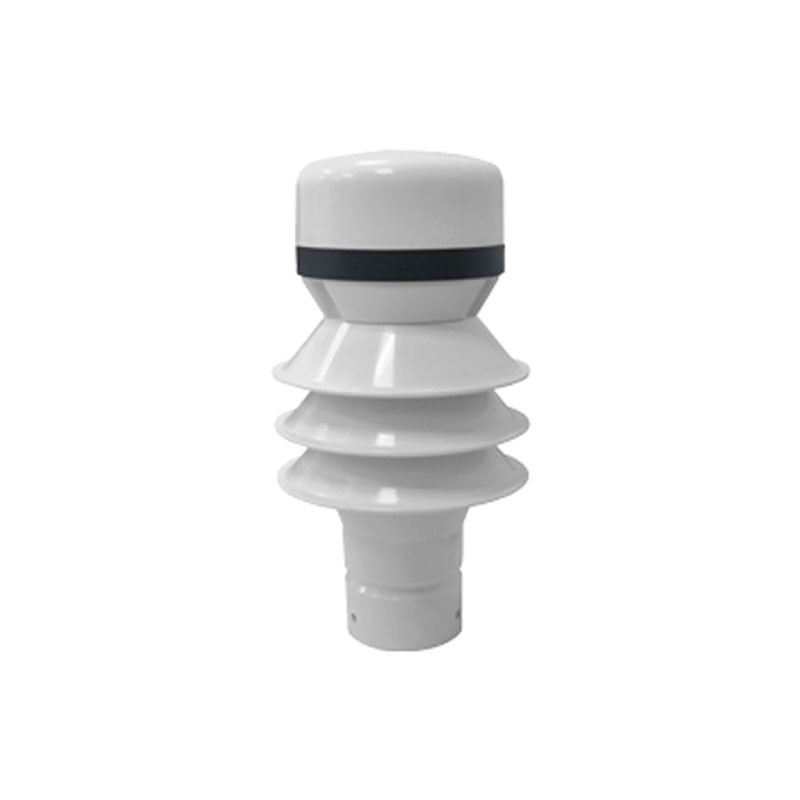
Radar rainfall sensors utilize 24GHz Doppler radar technology to accurately detect rain, snow, and hail, as well as precipitation intensity. Characterized by high precision and sensitivity, they feature a maintenance-free design with no mechanical parts and offer strong resistance to environmental interference, making them suitable for a wide range of all-weather rainfall monitoring scenarios.
As a new type of precipitation monitoring device developed using modern radar technology, the radar rainfall sensor incorporates a compact flat-panel radar module and 24GHz Doppler radar detection technology. It overcomes the technical limitations of traditional mechanical rainfall monitoring equipment, establishing itself as a mainstream device in the fields of meteorology, hydrology, and environmental monitoring. The device operates by using radar waves to precisely measure the falling speed and size of precipitation droplets. Based on these accurate parameters, it can clearly distinguish between different precipitation types—such as rain, snow, and hail—while accurately determining real-time precipitation intensity, thereby enabling integrated monitoring of various forms of precipitation.
In terms of detection performance, radar rainfall sensors offer significant advantages. Their overall sensitivity and response speed far exceed those of traditional mechanical monitoring equipment, allowing them to rapidly capture the start and end times of rainfall and accurately record data throughout the entire precipitation event. The device features standardized detection parameters: a rainfall measurement range of 0–200 mm/h, a droplet size detection range of 0.5–5.0 mm, and a rainfall resolution of 0.1 mm. In stable environments with wind speeds below 5 m/s, measurement accuracy remains consistently within 5%, meeting the precision requirements for professional meteorological monitoring and hydrological data statistics.
Environmental adaptability and ease of operation and maintenance (O&M) are key highlights of radar rainfall sensors. Traditional mechanical rainfall sensors have distinct drawbacks: debris or leaves covering the sensor surface can interfere with detection data, and freezing temperatures can impede normal operation, necessitating regular cleaning and the installation of heating elements—all of which drive up O&M costs. In contrast, radar rainfall sensors employ non-contact radar detection; monitoring performance is unaffected by surface debris, and there is no need for anti-freezing heating devices, making them suitable for diverse and complex outdoor environments.
Radar rainfall sensors contain no moving mechanical parts; consequently, there is no mechanical wear during operation, enabling virtually maintenance-free performance. Moreover, the device features a compact design, ease of installation, and extremely low power consumption, making it ideal for long-term, unattended field operations. It is highly versatile, suitable for a wide range of applications—such as meteorological station monitoring, hydrological flood control, ecological and environmental monitoring, and campus weather observation—and offers outstanding advantages in terms of both practicality and stability.
You may not know that the occurrence and spread of many plant diseases are related to pathogenic spores. Spores are the reproductive units of fungal pathogens, which are tiny in size and numerous in quantity. They can be widely transmitted through media such as wind, rain, and insects. Once spores l...
Microwaves refer to electromagnetic waves with frequencies ranging from 300MHz to 300GHz and wavelengths from 1 millimeter to 1 meter. Due to their high frequency and short wavelength, they have strong directivity and penetrating power, enabling stable propagation under different meteorological cond...
Vehicle-mounted weather instrument is a high-precision meteorological monitoring device designed for mobile platforms such as vehicles and ships. It can measure environmental temperature, relative humidity, wind speed, wind direction, atmospheric pressure, and piezoelectric rainfall data in real time....
Soil salinity refers to the total amount of various soluble salts contained in the soil. Imagine that the soil is like a large container filled with a variety of substances, and soil salinity is one of these substances. These salts mainly accumulate gradually during the soil formation process from s...


 Skype
Skype
 whatsapp
 mail
mail