Tianyi Sensor IOT Technology Co., Ltd
Sales Manager:Ms. Emily Wang
Cel,Whatsapp,Wechat:+86 15898932201
Email:info@fengtutec.com
Add:No. 155 Optoelectronic Industry Accelerator, Gaoxin District, Weifang, Shandong, China


Sales Manager:Ms. Emily Wang
Cel,Whatsapp,Wechat:+86 15898932201
Email:info@fengtutec.com
Add:No. 155 Optoelectronic Industry Accelerator, Gaoxin District, Weifang, Shandong, China
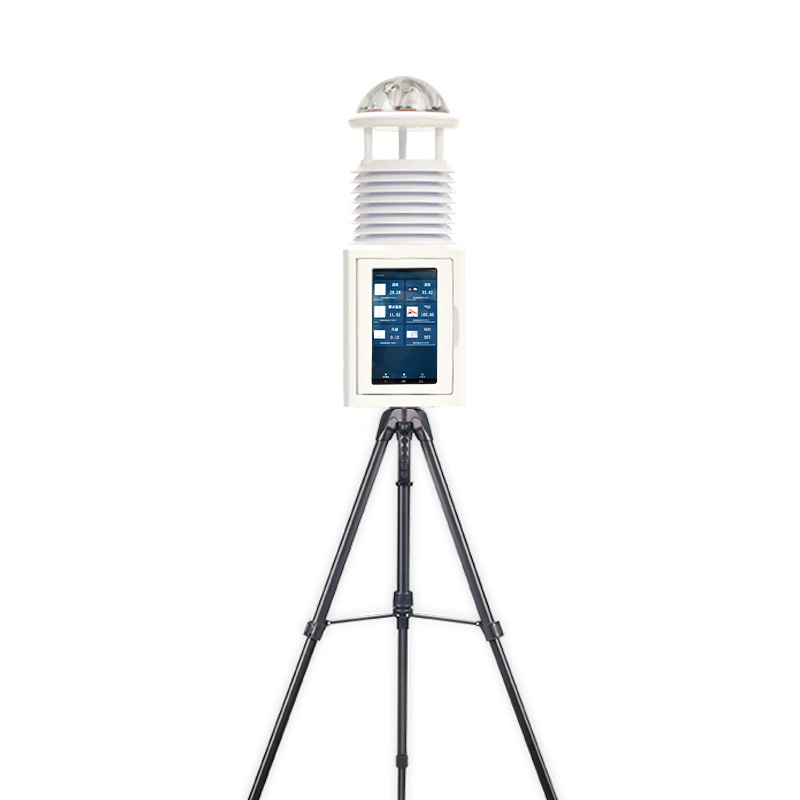
Model:FT-PQX9
Brand:tianyi
1.Introduction to Internet Weather Station
Internet Weather Station can transmit data remotely and monitor meteorological elements such as wind speed, wind direction, temperature, humidity, air pressure, optical rainfall, total radiation, PM2.5, PM10, etc.PQX9 Internet Weather Station is a highly integrated, low-power, fast installation and easy for field monitoring.
The device supports wireless transmission, no debugging, and can be quickly arranged.It is suitable for the acquisition of various types of emergency meteorological data such as short-term observation of emergency meteorological conditions, mobile meteorological monitoring and other meteorological data.Widely used in meteorological, agriculture and forestry, environmental protection, ocean, airport, port, scientific investigation, campus education and other fields
The device adopts a nine-element integrated sensor, which can conduct real-time observation of meteorological elements such as wind speed, wind direction, temperature, humidity, air pressure, optical rainfall, total radiation, pm2.5, pm10, etc.The sensor shell is made of imported Stainless steel material, which is more effective in resisting salt spray and other environments, and has a protection level of more than IP65.
2.Internet Weather Station product features
1.The hidden ultrasonic probe on the roof cover can avoid interference from rain and snow accumulation, and avoid natural wind shading☆
2.The principle is to transmit a continuous frequency conversion ultrasonic signal, and to detect the wind speed and direction by measuring the relative phase☆
3.Wind speed, wind direction, temperature, humidity, air pressure, optical rainfall, total radiation, pm2.5, pm10 nine-element integrated sensor☆
4.Lithium battery power supply, power display function
5.Shock-absorbing protective trolley case, easy to carry
6.Aluminum alloy bracket, retractable
7.Android 7-inch touch screen
3.Technical parameters of Internet Weather Station
1.Wind speed: 0~60m/s (±0.1m/s+0.01V);
2.Wind direction: 0~360° (±2°);
3.Air temperature: -40-80℃ (±0.3℃ (25℃));
4.Air humidity: 0-100%RH (±3%RH (20%~80%));
5.Atmospheric pressure: 300-1100hpa (±0.25%);
6.PM2.5: 0-1000ug/m3 (±10% (<500 micrograms));
7.PM10: 0-1000ug/m3 (±10% (<500 micrograms));
8.Total radiation: 0~1242W/㎡ (<±3%)
9.Optical rainfall: 0~4mm/min (≤±4%)
10.Data storage: no less than 500,000 pieces;
11.Power consumption: 1.75W
12.Lithium battery: capacity 12000maH, battery life ≥32h
13.Total weight of equipment: ≤5kg;
14.Layout time: 1 person, no more than 2 minutes to complete the layout;
15.The manufacturer has ISO quality management system, environmental management system and occupational health management system certification
16.The manufacturer has a computer software registration certificate
17.The manufacturer is a 3A credit enterprise
4.Introduction to the Internet Weather Station cloud platform
1.CS architecture software platform, supports direct observation of mobile phones and PC browsers without additional software installation
2.Support multiple accounts and multiple devices to log in
3.Support real-time data display and historical data display dashboard
4.Cloud server and cloud data storage, stable and reliable, easy to scale, and load balanced
5.Support SMS alarm and threshold settings
6.Support map display and viewing device information.
7.Support data curve analysis
8.Support data export table form
9.Support data forwarding, HJ-212 protocol, TCP forwarding, http protocol, etc.
10.Support data post-processing function
11.Support external running of javascript scripts
Online Turbidity Analyzer mainly consists of water temperature and turbidity sensors, enabling real-time online monitoring of water turbidity and temperature. It is widely used in municipal water supply, drinking water treatment, sewage treatment, industrial production, and livestock farming,...
The Weather Station Monitoring System is an important component of the overall environmental monitoring system. It is mainly used for real-time and continuous monitoring and data collection of various meteorological elements and related pollutants in the atmospheric environment, providing scientific...
The Life Detector Device, which fuses high-resolution thermal imaging with high-sensitivity audio, uses a 5-meter snake-tube probe to penetrate narrow crevices. In dark and complex environments, it clearly presents thermal images of the human body and captures weak audio signals such as breath...
Visibility and Present Weather Sensor uses the forward scattering method to measure the total extinction coefficient of air and calculate visibility. It can identify various weather phenomena such as fog, rain, snow, mixed precipitation, and clear skies, with a recognition rate of over 95%. It...


 Get a Free Quote
 Skype
Skype
 whatsapp
 mail
mail