Tianyi Sensor IOT Technology Co., Ltd
Sales Manager:Ms. Emily Wang
Cel,Whatsapp,Wechat:+86 15898932201
Email:info@fengtutec.com
Add:No. 155 Optoelectronic Industry Accelerator, Gaoxin District, Weifang, Shandong, China


Sales Manager:Ms. Emily Wang
Cel,Whatsapp,Wechat:+86 15898932201
Email:info@fengtutec.com
Add:No. 155 Optoelectronic Industry Accelerator, Gaoxin District, Weifang, Shandong, China
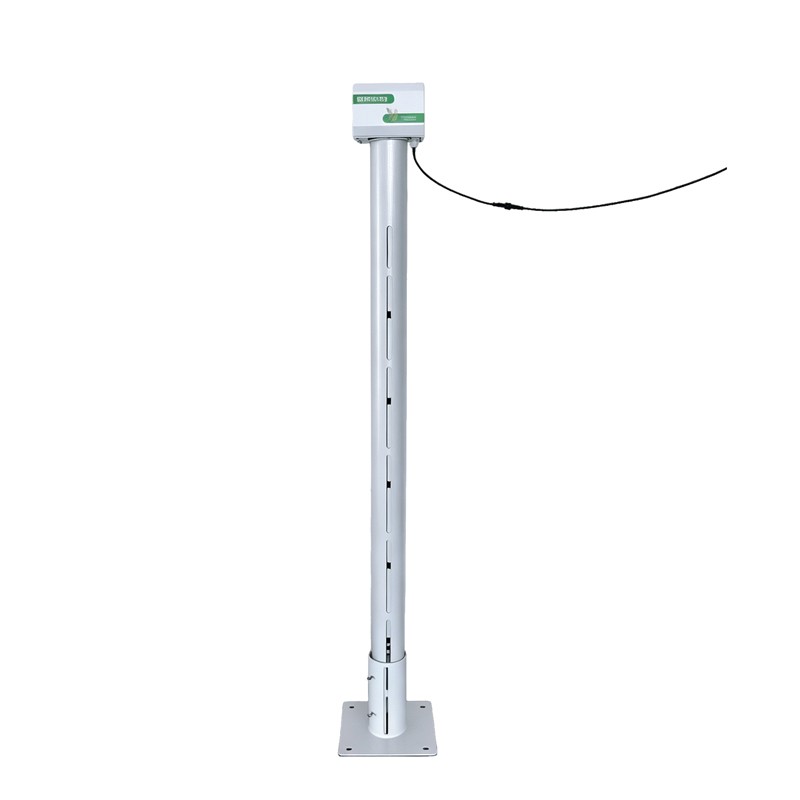
Model:FT-DTS1
Brand:tianyi
Rice Field Water Level Gauge Practical Significance:
Rice Field Water Level Gauge is an IoT device that enables high-precision, low-cost monitoring of water levels in rice fields to optimize irrigation.In the context of paddy field water level monitoring, the Rice Field Water Level Gauge resolves common issues such as the susceptibility of submersible level sensors to clogging by mud and silt, and the interference caused by rice foliage to ultrasonic or radar level sensors. Additionally, the Rice Field Water Level Gauge is lightweight, portable, and easy to install, making it ideal for mobile, multi-point monitoring across paddy fields; it is a water level measurement device specifically optimized for this application.
Furthermore, the Rice Field Water Level Gauge utilizes standard communication interfaces to link with integrated gate control systems, enabling automated, precision management of paddy field water levels. Supported by our company’s complimentary cloud services and mobile app, it facilitates a range of IoT-enabled functions—including remote online monitoring, data logging, trend analysis, and remote alerts—thereby ensuring scientifically managed rice cultivation and the efficient use of water resources.
Rice Field Water Level Gauge System Structure:
The unit consists of an integrated solar-powered main control housing, an antenna, a support pole, a mounting base, and ground anchors. Constructed from powder-coated stainless steel, the device is immune to rust-related damage and is designed for year-round installation in paddy fields.
Main Control Housing: Features an IP68 protection rating (waterproof, dustproof, and corrosion-resistant) and a built-in high-capacity lithium battery; the integrated solar design eliminates the need for an external power supply system.
Support Pole: Utilizes a "hollow conductive channel" design that provides a compact RF structure for radar sensing; this design avoids external interference with the radar signal while ensuring water circulation between the inside and outside of the pole.
Mounting Base: Secured via ground anchors for easy installation, making the device suitable for mobile, multi-point monitoring in paddy fields; it also ensures a stable baseline reference for radar measurements, resulting in higher accuracy for water level readings.
Measurement Method: Radar sensing;
Rice Field Water Level Gauge Measured Parameters:
RS485 Model: Supports networked monitoring of parameters such as paddy water level (air gap distance), actual water level, remaining battery power, and solar charging status.
Power Supply Range:
RS485 Model: 10–30 V DC.
Average Power Consumption: 0.6 W.
Communication Interfaces: RS485, 4G, NB-IoT, LoRa.
Measurement Range: Selectable ranges of 0–1 m, 0–2 m, or 0–3 m.
Typical Accuracy: ±1 mm.
Resolution: 1 mm.
Data Upload Frequency: Default 60 min/interval (battery-powered version); configurable.
Data Acquisition Frequency: Default 3600 s/interval (battery-powered version); configurable.
Ingress Protection: IP68.
Operating Environment: -20°C to +60°C; 0% RH to 99% RH (non-condensing).
Visibility Testing Instrument is a device used to measure atmospheric visibility. It uses the forward scattering method to calculate visibility, with a parameter range of 10km and a resolution of 1m. It is widely used in meteorological monitoring, traffic safety, environmental protection, and...
Ultrasonic Portable Mini Wind Meter is a meteorological instrument used to measure air flow speed and direction. It consists of two parts: a wind speed and direction sensor and a data display unit....
The optical rain gauge employs a three-channel narrowband infrared detector and a pure sinusoidal AC signal source, offering a rainfall resolution of 0.01 mm and a rainfall intensity range of 0 to 4 mm/min. It boasts a measurement accuracy of ≤±4%, strong resistance to ambient light interfer...
Displacement monitor utilizes a non-invasive laser-based detection method to provide continuous, long-range monitoring of displacement in structural components—such as walls, columns, and elements of dilapidated buildings. It triggers both audible/visual and wireless alarms upon detecting displacem...


 Get a Free Quote
 Skype
 whatsapp
 mail