Tianyi Sensor IOT Technology Co., Ltd
Sales Manager:Ms. Emily Wang
Cel,Whatsapp,Wechat:+86 15898932201
Email:info@fengtutec.com
Add:No. 155 Optoelectronic Industry Accelerator, Gaoxin District, Weifang, Shandong, China


Sales Manager:Ms. Emily Wang
Cel,Whatsapp,Wechat:+86 15898932201
Email:info@fengtutec.com
Add:No. 155 Optoelectronic Industry Accelerator, Gaoxin District, Weifang, Shandong, China
time:2026-03-19 11:31:50 source:Weather Station viewed:245 time
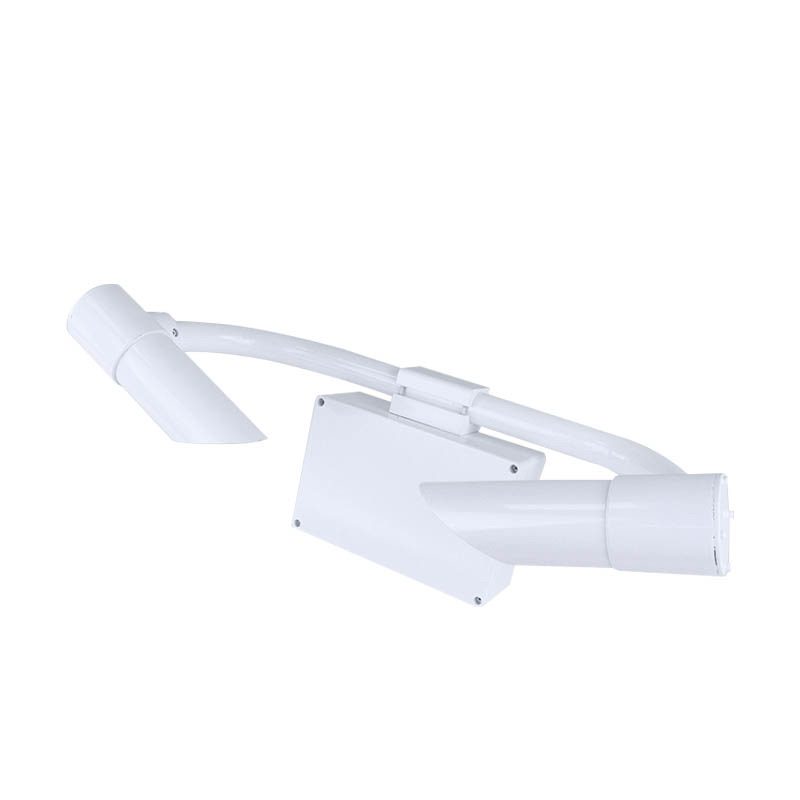
Road Weather Sensors employs the forward-scattering method to measure the air extinction coefficient and calculate visibility. It is capable of identifying five distinct phenomena—fog, rain, snow, mixed precipitation, and clear conditions—with an identification accuracy rate of ≥95%. With a power consumption of just 1W and an operating temperature range of -40°C to 60°C, it is ideally suited for automated, all-weather monitoring applications.
Road Weather Sensors is an automated monitoring device that integrates advanced optical sensing technologies. Its primary function is the real-time monitoring and identification of various weather phenomena. The device utilizes the forward-scattering method to measure the total air extinction coefficient, thereby calculating current visibility levels; simultaneously, it analyzes the characteristics of the scattered light signals to identify the specific type of weather phenomenon occurring. This makes it widely applicable across diverse fields, including road traffic management, meteorological observation, and airport operations support.
In terms of technical principles, Road Weather Sensors measures the total air extinction coefficient by emitting infrared light pulses and receiving the forward-scattered light reflected by aerosols and precipitation particles present in the atmosphere. By leveraging the distinct light-scattering characteristics associated with different types of particles, the device can accurately differentiate between various weather phenomena—specifically fog, rain, snow, mixed precipitation, and clear conditions. The optical lenses feature a downward-facing design, which significantly minimizes interference from extraneous light sources (such as direct sunlight) while simultaneously reducing measurement errors caused by the accumulation of rain or snow on the lens surfaces.
Regarding technical specifications, the detector offers a substantial visibility measurement range with a resolution of 1 meter. Measurement accuracy varies depending on the specific range: the error margin is ±2% for visibility levels ≤2 km, ±5% for levels between 2 km and 10 km, and ±10% for levels exceeding 10 km. The device demonstrates a repeatability error of ≤4%, and its weather phenomenon identification accuracy rate is no less than 95%. With an operating temperature range of -40°C to 60°C and an operating humidity range of 0% to 100% RH, the unit is capable of withstanding a wide spectrum of extreme climatic conditions.
The structural design of the device has been meticulously engineered to meet the rigorous demands of long-term outdoor operation. Its housing is constructed from high-quality aluminum material, treated with both anodizing and painting processes to ensure superior resistance to water, dust, and physical impact. A built-in watchdog circuit ensures the reliability and stability of the device during prolonged periods of continuous outdoor operation. Furthermore, both the communication and power supply interfaces incorporate integrated lightning protection designs to minimize the risk of damage caused by lightning strikes or electrostatic discharge. The device operates on a wide voltage range of 12 to 24V, with a total power consumption of approximately 1W; its extremely low power draw allows for long-term field operation using solar panels and storage batteries.
Regarding data output, the digital interface supports RS485 or RS232 standards and utilizes the standard MODBUS protocol, enabling direct data retrieval without the need for protocol adaptation. The instrument is capable of outputting visibility values at various time intervals, offering flexible and convenient operation. For installation, an open, level, and unobstructed site should be selected; the receiver must be positioned with its back facing away from strong light sources, and the transmitter and receiver units should be aligned along a north-south axis. An installation height between 1.5 and 3 meters is recommended.
In terms of application scenarios, the Road Weather Sensors unit can be deployed independently or integrated with automated weather stations to provide accurate data support for road weather monitoring, airport visibility observation, wind farm environmental monitoring, and similar applications. By accurately identifying weather phenomena such as fog, rain, and snow, it serves as a reliable foundation for ensuring traffic safety and facilitating meteorological early warning services.
Odor online monitor is a professional instrument that utilizes sensor array technology to perform real-time, continuous automatic monitoring of complex odor concentrations and characteristic malodorous gases in the environment. It can quantify and output dimensionless odor concentration OU values an...
rainfall measuring equipment has a 200mm diameter drum and uses a mechanical tipping bucket combined with electromagnetic induction to collect rainfall data. It has a resolution of 0.2mm, a measurement error of ≤±2%, supports Modbus 485 output, and can monitor rainfall of varying intensities...
The water and rainwater detection equipment, namely the Water Level Monitoring System, can efficiently and accurately obtain data such as water level, flow rate, and rainfall.The Water Level Monitoring System is a fully automatic hydrological online monitoring system based on microwave technology. I...
Ultrasonic anemometers calculate wind speed and direction using ultrasonic phase difference detection technology. They employ an integrated structure, eliminating mechanical wear and requiring no calibration or maintenance. They provide stable 24-hour monitoring and are suitable for various ou...


 Skype
Skype
 whatsapp
 mail
mail