Tianyi Sensor IOT Technology Co., Ltd
Sales Manager:Ms. Emily Wang
Cel,Whatsapp,Wechat:+86 15898932201
Email:info@fengtutec.com
Add:No. 155 Optoelectronic Industry Accelerator, Gaoxin District, Weifang, Shandong, China


Sales Manager:Ms. Emily Wang
Cel,Whatsapp,Wechat:+86 15898932201
Email:info@fengtutec.com
Add:No. 155 Optoelectronic Industry Accelerator, Gaoxin District, Weifang, Shandong, China
time:2025-03-21 13:37:38 source:Weather Station viewed:425 time
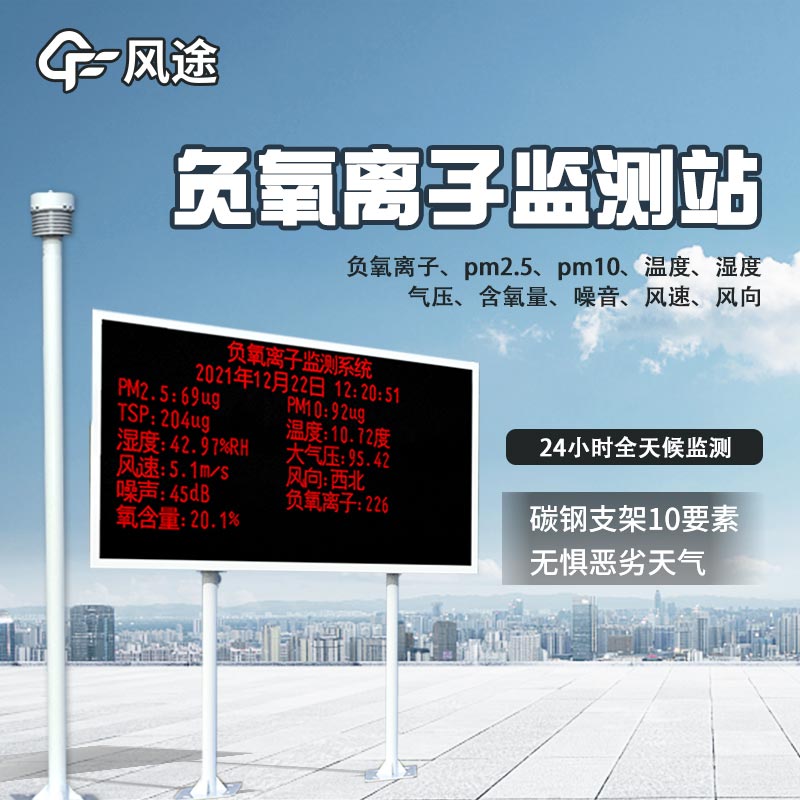
As a densely - populated public place, the air quality in scenic spots directly affects the tourist experience and ecological value. The negative oxygen ion concentration, as a core indicator for measuring air quality, has made its monitoring system a standard configuration in the construction of smart scenic spots. Negative oxygen ions, known as "air vitamins", have the functions of inhibiting bacteria, removing dust, and purifying the air, and are beneficial to human health. Scientific research shows that when the negative oxygen ion content in the air exceeds 700 ions/cm³, it can effectively enhance human immunity. In forest environments, the negative oxygen ion concentration can reach 5000 - 10000 ions/cm³, which is the key to the fresh air there.
The Negative oxygen ion monitoring station adopts multi - dimensional environmental perception technology and supports the synchronous monitoring of 12 parameters such as negative oxygen ions, PM2.5, temperature and humidity, wind speed and direction. It can achieve real - time data upload through 4G/5G networks. The system has the following functions:
Precise monitoring: Using imported sensors, the detection accuracy of negative oxygen ions reaches ±10%, and the response time is < 10 seconds.
Intelligent early - warning: With a built - in threshold alarm function, it automatically triggers an audible and visual alarm when the air quality index exceeds the standard.
Flexible deployment: It provides various installation solutions such as pole - mounted, wall - mounted, and tower - mounted, and supports dual power supply of solar energy + lithium - ion battery.
Data analysis: Equipped with a professional cloud platform, it can generate daily/monthly/annual trend reports and support API data docking.
Currently, this system has been successfully applied in many well - known scenic spots across the country. According to the measured data of the scenic spots, the system can provide early warnings of air pollution incidents and assist the management department in starting environmental governance measures in a timely manner. Its modular design supports subsequent function expansion. Users can add modules such as five - parameter meteorological monitoring and noise monitoring according to their needs. The device has an IP66 protection level and can operate stably in extreme environments from - 40℃ to 70℃, with a low daily maintenance cost.
By deploying the Negative oxygen ion monitoring station, scenic spots can not only keep track of air quality dynamics in real - time, but also enhance the tourist experience through data visualization, providing data support for the creation of national - level ecological tourism demonstration zones.
In the field of wind power generation, accurate measurement of wind speed and direction is essential for wind farm site selection, wind turbine power characteristic research, and generator set power control.Traditional mechanical anemometers suffer from issues such as wear and aging of moving parts,...
Precision Snow/Rain Gauge The FT-YX2 employs the weighing method to measure all types of precipitation, capable of monitoring liquid, solid, and mixed solid-liquid forms. It features a measurement range of 0–1500 mm, a resolution of 0.01 mm, a maximum measurement error of ±0.1 mm, and an ope...
An air quality monitoring station is an unmanned environmental monitoring device that integrates data collection, storage, transmission, and management. Its core advantage lies in its ability to conduct high-precision, real-time monitoring of various pollutants. The system can provide data on parame...
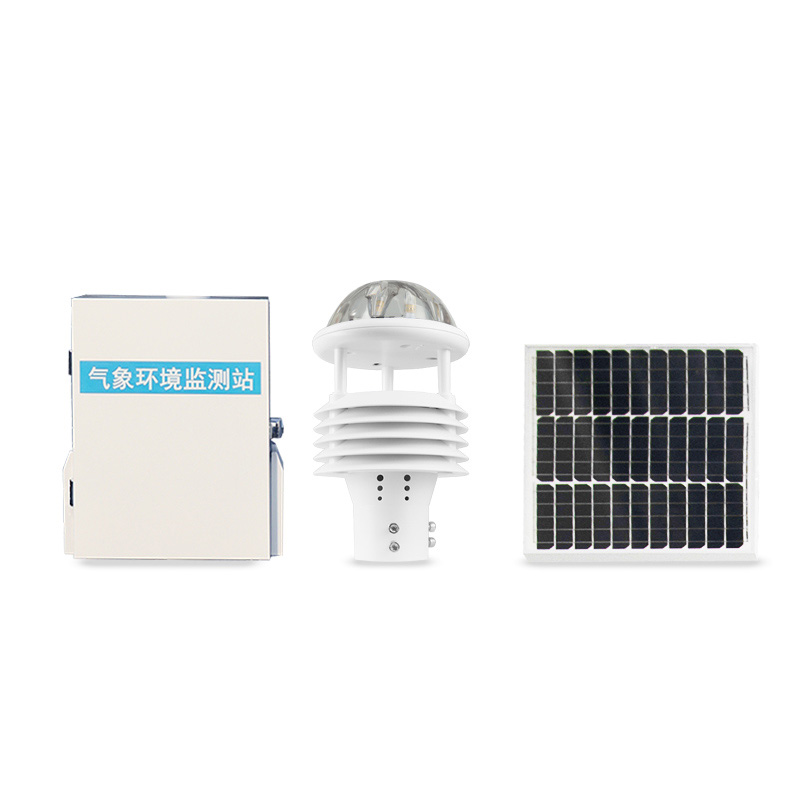
Meteorological monitoring equipment includes six-parameter automatic weather stations, precipitation sensors, radiation observation stations, and unmanned aerial vehicle (UAV) systems, used to monitor meteorological elements such as temperature, humidity, wind speed and direction, rainfall, at...


 Skype
Skype
 whatsapp
 mail
mail