Tianyi Sensor IOT Technology Co., Ltd
Sales Manager:Ms. Emily Wang
Cel,Whatsapp,Wechat:+86 15898932201
Email:info@fengtutec.com
Add:No. 155 Optoelectronic Industry Accelerator, Gaoxin District, Weifang, Shandong, China


Sales Manager:Ms. Emily Wang
Cel,Whatsapp,Wechat:+86 15898932201
Email:info@fengtutec.com
Add:No. 155 Optoelectronic Industry Accelerator, Gaoxin District, Weifang, Shandong, China
time:2025-10-16 09:03:24 source:Weather Station viewed:412 time
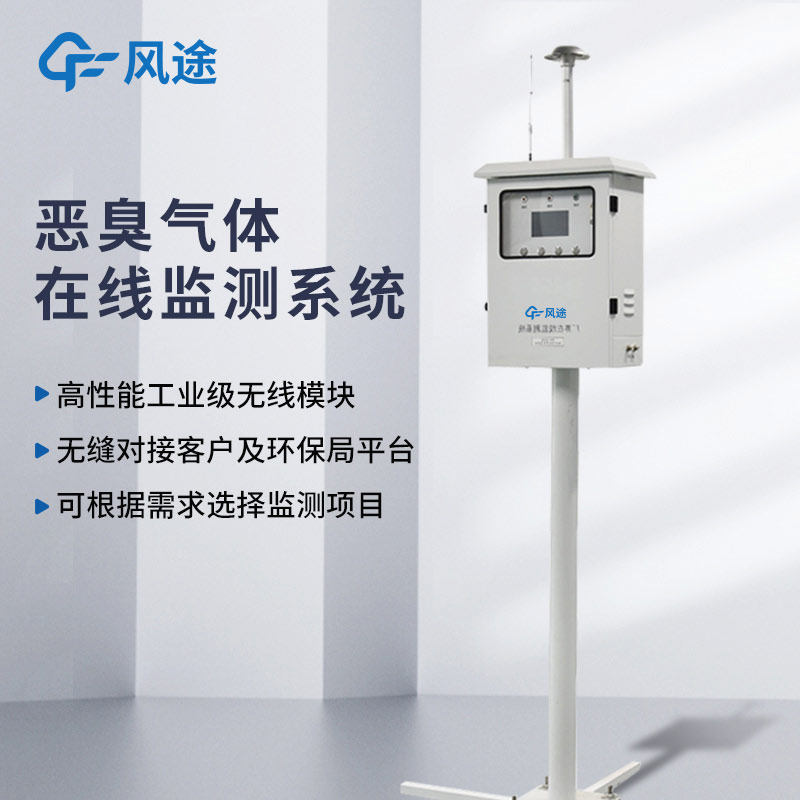
The core of the Odor Online Monitor lies in simulating human olfactory perception, enabling simultaneous monitoring of multiple malodorous pollutants. It is particularly suitable for 24/7 continuous monitoring in environments such as landfill sites, chemical industrial parks, and wastewater treatment plants.
The system integrates multiple sensor technologies capable of detecting various key malodorous substances including ammonia, hydrogen sulfide, volatile organic compounds (VOCs), trimethylamine, and methyl mercaptan.
Each sensor within the system can be individually inserted, removed, calibrated, and replaced. When a sensor approaches the end of its service life, the system provides advance warning, greatly facilitating on-site maintenance without requiring the entire unit to be returned to the factory.
Monitoring data can be transmitted via multiple methods including 4G wireless and wired connections. It can not only directly interface with environmental protection bureau supervision platforms but also enables remote viewing and management through computer web pages or mobile applications.
As Tianyi's core product in the odor monitoring field, models FT-EC09A and FT-EC03A strictly adhere to the National Malodor Pollution Control Standard (GB14554). They focus on monitoring odor concentration (OU value), ammonia, hydrogen sulfide, and other indicators, serving as powerful tools for environmental supervision and pollution source tracing.
Beyond the traditional scenarios mentioned earlier such as garbage stations and wastewater treatment plants, this system plays a role in various other fields:
In livestock breeding and feed processing areas, it effectively monitors ammonia, hydrogen sulfide, trimethylamine, and other characteristic malodorous substances generated in farm sheds, composting areas, and feed production processes, helping improve the surrounding living environment.
In the food and fermentation industry, monitoring points are placed around factories prone to complex fermentative odors such as soy sauce brewing, beer production, and food processing to monitor their impact on communities.
At the boundaries between urban residential areas and industrial parks, monitoring stations are established in the transition zones to clarify responsibilities for environmental complaints, resolve factory-community conflicts, and serve as an "electronic nose witness" for determining environmental disputes.
rainfall measuring equipment has a 200mm diameter drum and uses a mechanical tipping bucket combined with electromagnetic induction to collect rainfall data. It has a resolution of 0.2mm, a measurement error of ≤±2%, supports Modbus 485 output, and can monitor rainfall of varying intensities...
Although traditional mechanical wind speed and direction meters have, to some extent, met basic requirements, they have limitations in terms of accuracy, response speed, and reliability. With the advancement of technology, the 3D Ultrasonic Anemometer based on the time - difference method has been d...
Every flood season, heavy rainfall occurs frequently, causing water levels in rivers and lakes to rise rapidly, and the risk of flood disasters increases significantly. During such a special period, the Radar Current Meter, as a professional hydrological monitoring device, becomes an important tool...
A weather phenomenon sensor is an optical measuring instrument that uses the forward scattering principle. It emits an infrared pulse beam into the atmosphere and receives the scattering signals from aerosol particles, calculating the extinction coefficient to determine the visibility value. T...


 Skype
Skype
 whatsapp
 mail
mail