Tianyi Sensor IOT Technology Co., Ltd
Sales Manager:Ms. Emily Wang
Cel,Whatsapp,Wechat:+86 15898932201
Email:info@fengtutec.com
Add:No. 155 Optoelectronic Industry Accelerator, Gaoxin District, Weifang, Shandong, China


Sales Manager:Ms. Emily Wang
Cel,Whatsapp,Wechat:+86 15898932201
Email:info@fengtutec.com
Add:No. 155 Optoelectronic Industry Accelerator, Gaoxin District, Weifang, Shandong, China
time:2026-02-02 11:43:04 source:Weather Station viewed:285 time
Present weather and visibility sensor is a professional meteorological observation device based on the forward scattering principle. It calculates real-time visibility by measuring the total extinction coefficient of the air, enabling automated identification and recording of weather phenomena. This sensor is widely used in automatic weather stations for road traffic, maritime, and airport applications, providing critical data for safety warnings, weather forecasting, and climate research.
Present weather and visibility sensor is a professional meteorological device that utilizes optical principles for automated observation. Its core function is to objectively and continuously identify and record various weather phenomena, such as fog, haze, rain, and snow, and quantitatively measure the key parameter—meteorological optical range (visibility). The device is designed to replace traditional manual visual observation, providing standardized and comparable digital data.
The main working principle of this sensor is the forward scattering measurement method. The device contains a precise transmitting unit and a receiving unit. The transmitting unit emits infrared or visible light of a specific wavelength. As the light beam passes through a certain volume of air in front of it, it scatters off particles in the air (such as fog droplets, raindrops, dust, and pollutants). The receiving unit, located at a specific angle (usually a small forward angle, such as 30° to 45°), accurately detects the intensity of the scattered light. By analyzing the relationship between the received scattered light intensity and the transmitted light intensity, the total extinction coefficient of the air can be calculated. This coefficient directly reflects the attenuation capacity of the atmosphere to light, and then the visibility value under current conditions can be calculated according to international standard formulas. Compared to traditional transmissometer visibility meters, the forward scattering structure is more compact, with a shorter baseline distance, making it more suitable for installation at sites with limited space.
In terms of hardware structure, the sensor is specifically designed for long-term outdoor operation. The optical window uses a hydrophobic and dustproof coating and may be equipped with an automatic heating device to prevent condensation, frost, or snow accumulation, ensuring the cleanliness and unobstructed nature of the optical path. The overall casing has good sealing and corrosion resistance, capable of withstanding harsh environmental conditions such as wind, rain, and salt spray. The device integrates an internal data processing unit that calculates and outputs visibility values in real time. It also automatically identifies the current main weather phenomena (light fog, dense fog, rain, snow, etc.) based on visibility data and signals from auxiliary sensors (such as precipitation sensors).
Its most important application is in various types of traffic safety meteorological monitoring. In road traffic, the sensor is integrated into automatic weather stations along highways, especially in high-risk sections prone to fog or severe weather, such as highways, mountain roads, and bridge and tunnel entrances. Real-time visibility data is transmitted to the monitoring center via a communication network, providing direct evidence for issuing fog warnings, implementing speed control, or closing roads. In aviation, it is deployed around airport runways, forming part of an automatic weather observation system (AWOS), providing accurate runway visual range (RVR) data for aircraft takeoffs and landings, ensuring flight safety. In the maritime sector, it is installed at key locations in ports and waterways to monitor weather phenomena such as sea fog that affect navigation safety.
Furthermore, the device is an important component of national and regional meteorological observation networks. It is deployed in various meteorological observation stations, providing continuous visibility and weather phenomenon data. This data is a crucial input for weather forecasting, especially for warnings of hazardous weather (such as dense fog, dust storms, and heavy precipitation). In climate and environmental research, long-term accumulated visibility data can be used to analyze regional atmospheric transparency changes, assess long-term air quality trends, and evaluate the impact of climate change.
The sensor typically outputs standardized digital signals, facilitating integration with automatic weather station data loggers. The data logger packages visibility and weather phenomenon codes along with other meteorological elements such as temperature, humidity, pressure, wind, and precipitation, and transmits them to a central data platform via wired or wireless means. The platform software performs data quality control, storage, analysis, and visualization, ultimately serving multiple levels of traffic management, aviation operations, public meteorological services, and scientific research, becoming an indispensable basic equipment in modern meteorological observation and safety assurance systems.
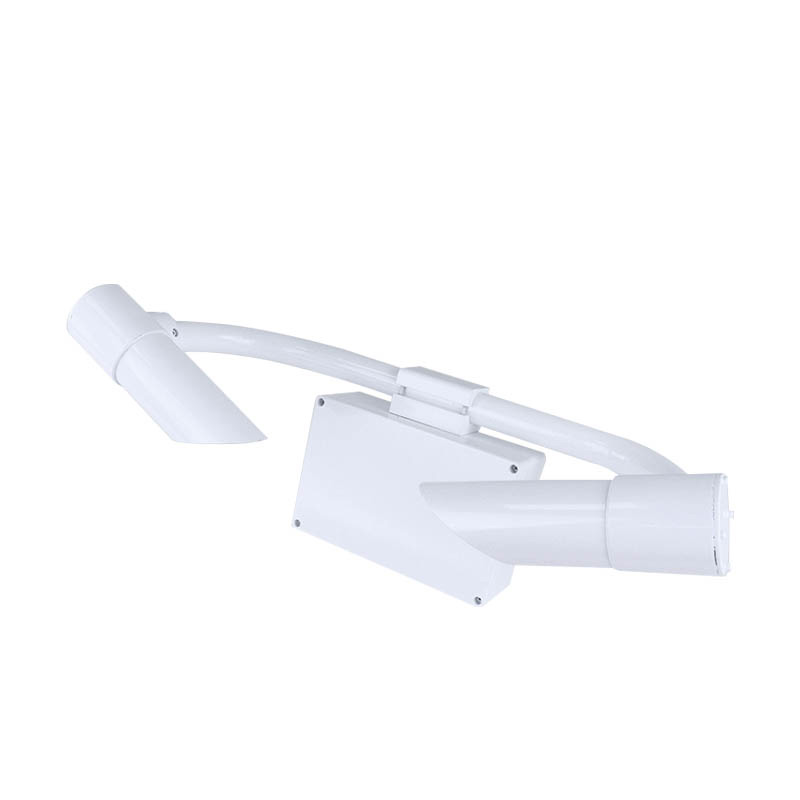
instrument used to measure rainfall employs a three-channel narrowband infrared detector and a pure sinusoidal AC signal source, achieving a rainfall resolution of 0.01mm, a rainfall intensity range of 0-4mm/min, and a measurement accuracy of ≤±4%. The device consumes only 0.12W and operates...
Water Rescue Equipment refers to a remotely controlled lifebuoy. Controlled wirelessly, it is powered by four ducted propulsion units, achieving an unloaded speed of 27 km/h. It supports one-key return and automatic return upon loss of contact, making it suitable for rescue operations in river...
A propeller flow meter is a contact-type water flow velocity measuring instrument. Its working principle is that water flow pushes the instrument's propeller to rotate around an axis, and there is a definite functional relationship, usually linear, between the rotational speed of the propeller a...
What kinds of Wind Speed Sensors are there on the market and how should consumers choose?There are a wide variety of Wind Speed Sensors available in the market. However, according to the detection principles, they can be classified into mechanical sensors, ultrasonic sensors, thermal sensors, Pitot...


 Skype
Skype
 whatsapp
 mail
mail