Tianyi Sensor IOT Technology Co., Ltd
Sales Manager:Ms. Emily Wang
Cel,Whatsapp,Wechat:+86 15898932201
Email:info@fengtutec.com
Add:No. 155 Optoelectronic Industry Accelerator, Gaoxin District, Weifang, Shandong, China


Sales Manager:Ms. Emily Wang
Cel,Whatsapp,Wechat:+86 15898932201
Email:info@fengtutec.com
Add:No. 155 Optoelectronic Industry Accelerator, Gaoxin District, Weifang, Shandong, China
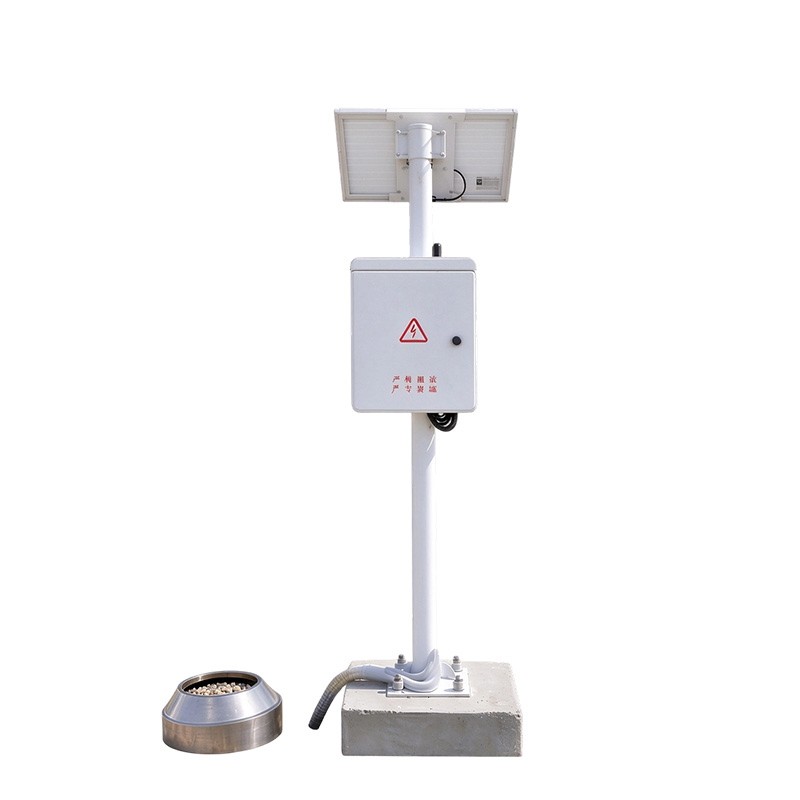
Model:FT-ZS80
Brand:tianyi
1、Soil Lysimeter Monitoring System Product Overview
Soil Lysimeter Monitoring System utilizing a gravimetric measurement technique, it is designed to quantify soil evaporation and percolation, as well as to study crop water consumption patterns—making it ideal for research on soil evapotranspiration.Soil evaporation is a critical component of the soil water cycle. Soil Lysimeter Monitoring System serves as an essential, convenient, and flexible tool for studying soil moisture evaporation. It can be used to measure soil evaporation in areas with growing crops, on bare soil, or beneath a crop canopy, delivering highly accurate results. The core component features a high-precision load cell, ensuring enhanced stability. With an RS485 output, the device can be integrated into existing data loggers or observation systems, enabling automated weighing, measurement, and data storage—thereby reducing research costs.
2、Soil Lysimeter Monitoring System System Components
1 micro-lysimeter, 1 data logger, 1 solar power supply system, 1 equipment enclosure, and 1 mounting assembly (a 2-meter, two-section galvanized steel mast with a diameter of at least 76 mm, including a base or expansion bolt hardware).
3、Soil Lysimeter Monitoring System Product Features
High precision; designed for in-ground installation to minimize disturbance; enables convenient and rapid extraction of undisturbed soil samples.
4、Soil Lysimeter Monitoring System Technical Specifications
Soil column specifications: 80 cm in diameter, cylindrical container, made of stainless steel.
Evaporation resolution: ≤0.1 mm;
Percolation (leaching) resolution: ≤0.03 mm;
Integrated external protective structure, featuring a stainless steel rain-shielding enclosure;
Automatic drainage system, with accumulated water pumped out automatically.
2. Data Acquisition and Transmission Unit
The main environmental data logger displays collected environmental data in real time. Core: ARM architecture.
Display screen for showing data, time, date, parameter settings, etc.
Equipped with a watchdog circuit and automatic reset function to ensure stable system operation.
Supports expandable USB flash drive storage, allowing data to be exported to a computer via dedicated PC-side software.
Reporting modes: Supports both active (push) and passive (polled/request-based) reporting, switchable on the device. Protocols (XPH, MODBUS, JSON) and the device’s serial communication address can be configured manually.
Supports remote or local firmware upgrades via serial port.
Parameters can be configured locally using physical buttons on the device.
Historical data storage interval is manually configurable (1–240 minutes).
Equipped with wireless communication hardware, supporting remote configuration updates.
1) Includes 3 years of communication service fees.
2) Supports 4G, Wi-Fi, and GPS.
3) Provides stable relay communication services with reliable, consistent performance.
4) All data links must be located within China; the use of overseas data links or foreign servers for data transmission or relay is strictly prohibited.
5) Communication relay servers must not store, back up, forward, or share data with third parties.
3. Technical Specifications
Electrical safety performance complies with the GB4793.1-2007 standard. The insulation resistance between the power terminals and the IoT terminal enclosure must be at least 10 MΩ. When powered by an AC source, the device must withstand a 3000V high-voltage test for 1 minute without breakdown or arcing.
Under normal operating conditions, the leakage current must not exceed 5 mA (AC).
Environmental adaptability complies with GB/T2423.1-2008, GB/T2423.2-2008, and GB/T2423.3-2016 standards. Operating temperature range: -40°C to 85°C; operating humidity range: 0–95% RH (non-condensing).
As a crucial component of the power system, transmission lines undertake the important task of efficiently transmitting the electrical energy generated by power plants to various regions. By constructing a vast transmission network, electrical energy can travel over long distances to meet the electr...
A Negative Oxygen Ion Monitoring Station is a professional set of equipment used to monitor the number of negative oxygen ions in the air in real-time. It records the activity status of negative oxygen ions in the air through specific sensors, then converts these statuses into readable values via a...
An ultrasonic weather station is a highly integrated meteorological monitoring device that utilizes modern ultrasonic detection technology. It emits ultrasonic waves and measures changes in their propagation speed through the air to accurately calculate wind speed and direction, completely eliminati...
A soil moisture monitoring system is a comprehensive station that conducts real-time monitoring of soil moisture and related environmental parameters. Equipped with high-precision sensors, it adopts technologies such as Frequency Domain Reflectometry (FDR) and Time Domain Reflectometry (TDR) to accu...


 Get a Free Quote
 Skype
 whatsapp
 mail