Tianyi Sensor IOT Technology Co., Ltd
Sales Manager:Ms. Emily Wang
Cel,Whatsapp,Wechat:+86 15898932201
Email:info@fengtutec.com
Add:No. 155 Optoelectronic Industry Accelerator, Gaoxin District, Weifang, Shandong, China


Sales Manager:Ms. Emily Wang
Cel,Whatsapp,Wechat:+86 15898932201
Email:info@fengtutec.com
Add:No. 155 Optoelectronic Industry Accelerator, Gaoxin District, Weifang, Shandong, China
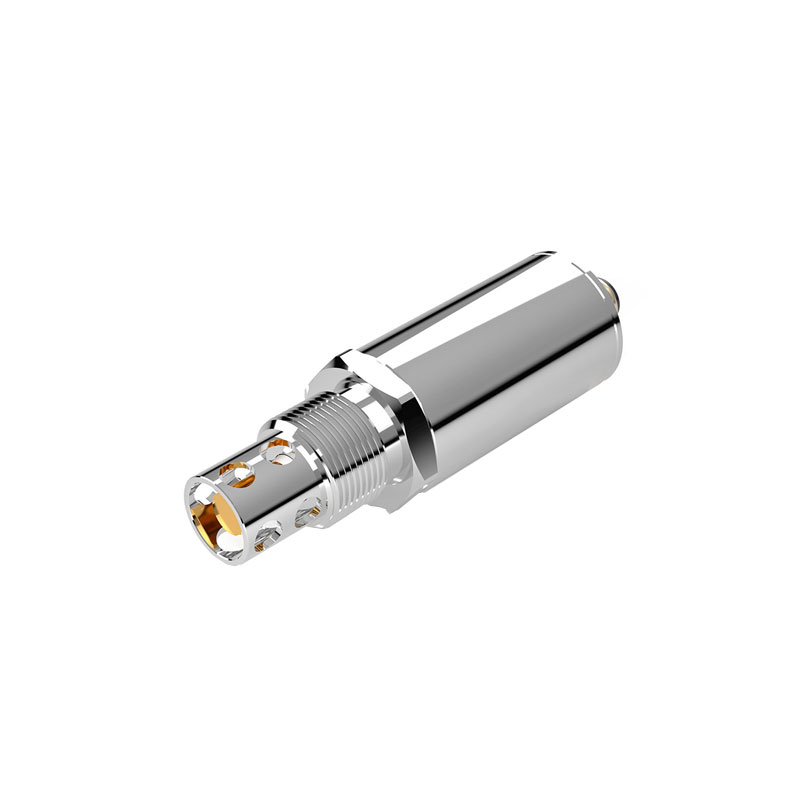
Model:Q-1624
Brand:tianyi
1、Oil dielectric constant sensor Product Introduction
Oil dielectric constant sensor can measure the aging and contamination status of lubricating oil by measuring changes in its dielectric constant.Oil dielectric constant sensor is used for real-time, online monitoring of lubricating oil health. Continuous monitoring of the oil condition improves condition-based maintenance efficiency, optimizes oil change intervals, and reduces reliance on offline analysis.
Oil dielectric constant sensor uses electrochemical impedance spectroscopy (EIS) to detect the dielectric constant of the oil, thereby determining its health status. Impedance spectroscopy can detect multiple parameters, which can be used to assess the wear and tear of lubricating oil additives, monitor oil aging, and determine oil contamination levels.
Oil dielectric constant sensor helps users improve equipment asset health management, assisting in maintenance decisions based on real-time monitoring results and preventing abnormal wear and corrosion caused by oil aging and contamination.
2、Oil dielectric constant sensor Features
Wide range of applications, suitable for all lubricating oils.
Simultaneous measurement of multiple parameters promptly detects lubricating oil contamination and aging, helping users optimize oil change intervals.
Big data oil analysis algorithms help customers solve diagnostic challenges and include built-in health index analysis.
24/7 uninterrupted monitoring provides timely feedback on oil status.
Strong compatibility, compatible with CAN-J1939 and RS485-Modbus RTU.
Suitable for monitoring under high-speed flow conditions, with stronger viscosity interference resistance than similar sensors.
Robust and durable integrated design eliminates the need for external valve blocks, facilitating installation.
3、Oil dielectric constant sensor Application areas
Lubricating oil is the "blood" of critical equipment. Lubricating oil failure directly leads to abnormal wear of mechanical structures and critical functional components, a major cause of large equipment failures and serious accidents.
Oil dielectric constant sensor can continuously monitor the aging and contamination levels of the oil in the hydraulic system 24 hours a day, providing real-time feedback on the oil's operating status. This helps users avoid or mitigate equipment failures caused by lubricating oil failure.
Oil dielectric constant sensor can be widely used in industries such as power, mining, cement, shipbuilding, military, industrial manufacturing, papermaking, petrochemicals, transportation, metallurgy, aviation, oil fields, and ports, for applications such as wind turbine gearboxes, aircraft/helicopter gearboxes, hydraulic transmission systems, machining centers, steam turbines, gearboxes, and gasoline/diesel engines.
4、Oil dielectric constant sensor Technical parameters
Dielectric Constant
Dielectric Constant: 1~10;
Dielectric Constant Accuracy: ±0.01 (Absolute Accuracy);
Temperature
Measurement Range: −40...120°C
Accuracy (at+25°C): ±0.2°C
Operating Temperature: −40...+85°C
Storage Temperature: −40...+85°C
Permissible Oil Temperature: −40...+120°C
Health Index: 0~5000
Output
Digital Signal: RS485 MODBUS-RTU (RS232 optional), CAN-J1939
Analog Signal: 4~20mA, 0~20mA, Resistive Load <500Ω
Other
Mechanical Interface: M24*1.5G1/2
Pressure Range: Maximum 30bar
Probe Material: 304 Stainless Steel
Protection Rating: IP67
Power Supply: DC 5V-36V
Power supply current < 5mA + load current
Transmitter weight < 200g
Total package weight < 270g
Cable specification M12 5-core
Cable length 2 meters
Complies with standards CE certification EN 61326-1 EN61326-2-3 ICES-003 Class B
The 3D ultrasonic anemometer utilizes ultrasonic measurement technology and features an all-metal construction devoid of any moving parts; it is capable of simultaneously measuring wind direction in both horizontal and vertical planes while outputting wind speed components along the X, Y, and...
Entering the high - standard farmland demonstration area, 25 newly installed Solar insecticidal lamps are neatly arranged in the fields. These devices consist of silver lamp poles, black solar panels, and green lamp housings. They absorb solar energy and store electricity during the day, and at nigh...
A propeller flow meter is a contact-type water flow velocity measuring instrument. Its working principle is that water flow pushes the instrument's propeller to rotate around an axis, and there is a definite functional relationship, usually linear, between the rotational speed of the propeller a...
Weighing Rain Gauge uses a C6 high-precision weighing sensor with a full-range accuracy of 0.1mm. Its separate internal and external independent grounding structure, combined with a stainless steel outer protective casing, effectively resists wind interference, making it suitable for monitorin...


 Get a Free Quote
 Skype
Skype
 whatsapp
 mail
mail