Tianyi Sensor IOT Technology Co., Ltd
Sales Manager:Ms. Emily Wang
Cel,Whatsapp,Wechat:+86 15898932201
Email:info@fengtutec.com
Add:No. 155 Optoelectronic Industry Accelerator, Gaoxin District, Weifang, Shandong, China


Sales Manager:Ms. Emily Wang
Cel,Whatsapp,Wechat:+86 15898932201
Email:info@fengtutec.com
Add:No. 155 Optoelectronic Industry Accelerator, Gaoxin District, Weifang, Shandong, China
time:2026-06-02 11:22:00 source:Weather Station viewed:138 time
Meteorological equipment includes surface-based meteorological observation instruments and upper-air meteorological sounding instruments, used for weather forecasting, climate research, and environmental management. Highly integrated small-scale automatic meteorological observation equipment employs a multi-element integrated sensor design, enabling real-time monitoring of wind speed and direction, temperature and humidity, air pressure, optical rainfall, and multiple air pollutants, meeting the needs of continuous 24-hour outdoor observation.
Meteorological equipment consists of specialized instruments used to monitor and record various meteorological elements, mainly including two categories: surface-based meteorological observation instruments and upper-air meteorological sounding instruments. Surface-based meteorological observation instruments measure parameters such as temperature, air pressure, humidity, wind, precipitation, and evaporation in the near-surface atmosphere, while upper-air meteorological sounding instruments detect meteorological elements in the free atmosphere. These two types of equipment collectively serve applications such as weather forecasting, climate research, and environmental management, playing a fundamental role in meteorological observation networks. Commonly used meteorological equipment includes automatic weather stations, automatic rain gauges, anemometers, Stevenson screens, temperature and humidity recorders, sensors, wind vanes, meteorological center software, and GPRS wireless transmission modules, covering the complete chain from fixed ground observation to wireless data transmission.
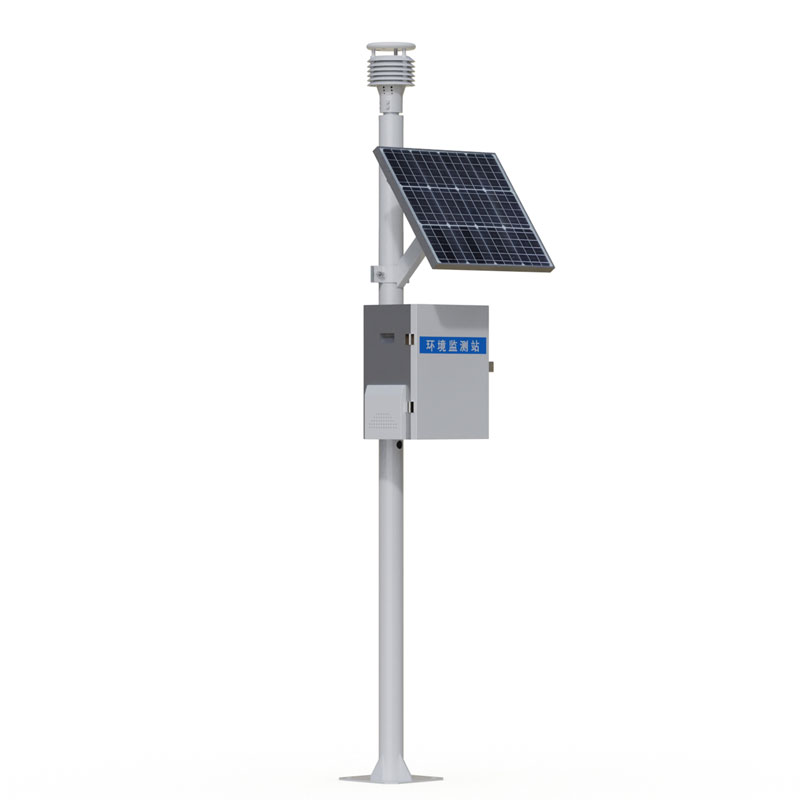
In recent years, a significant development trend in meteorological equipment has been integration and modularization. New types of meteorological equipment, represented by small automatic weather stations, integrate multiple sensors into a single unit, replacing the complex wiring of traditional separate equipment and effectively reducing the workload of field installation and maintenance. These devices are highly integrated, low-power, quickly installable, and easy-to-use high-precision automatic meteorological observation equipment. They consist of five parts: meteorological sensors, a data logger, a solar power system, a pole support, and a cloud platform. They require no debugging, can be quickly deployed, and are widely used in meteorology, agriculture, forestry, environmental protection, marine science, airports, ports, scientific research, and educational institutions. The equipment adopts a multi-element integrated sensor design, capable of simultaneously monitoring multiple meteorological and environmental parameters, and outputting them to the user in a single output via a digital communication interface, achieving 24-hour continuous online monitoring of outdoor meteorological parameters.
The sensor housing is typically made of imported ABS material, which is more effective against environmental corrosion such as salt spray, achieving a protection level of IP65 or higher, making it suitable for long-term stable operation under various complex outdoor conditions. For the power supply system, these devices usually employ a combination of solar panels and batteries, combined with a low-power design, allowing continuous operation in remote areas without mains power. In terms of data transmission, the devices support multiple wireless communication methods such as 4G, LoRa, and Bluetooth, enabling real-time uploading of monitoring data to a cloud platform. Users can remotely access and view meteorological data, set warning thresholds, and receive alarm information. As meteorological equipment develops towards miniaturization, lightweighting, and intelligence, meteorological observation is expanding from fixed stations to new platforms such as mobile terminals and drones, gradually integrating into a wider range of production and daily life scenarios.
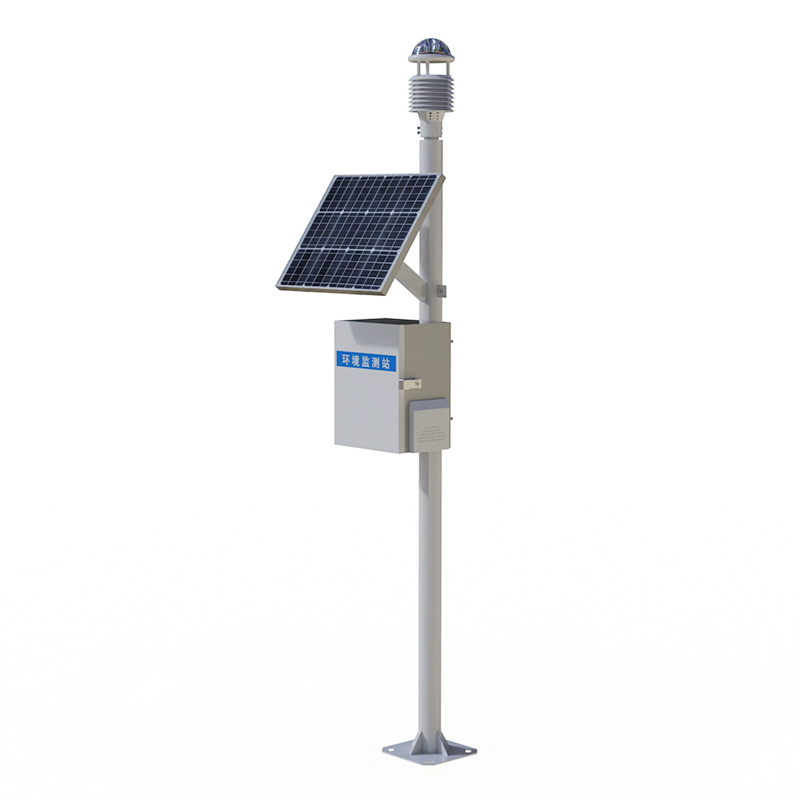
Ultrasonic anemometers calculate wind speed and direction using ultrasonic phase difference detection technology. They employ an integrated structure, eliminating mechanical wear and requiring no calibration or maintenance. They provide stable 24-hour monitoring and are suitable for various ou...
The Series power supply supporting UAV inspection is a special supporting equipment for UAV inspection of photovoltaic power plants, also known as Series power supply or UAV string power supply. Its core function is to convert alternating current into direct current and input it into the battery pan...
This fully automated online hydrological monitoring device, based on K-band planar radar technology, can simultaneously measure water level, flow velocity, flow rate, and rainfall. Employing a non-contact measurement method, it is unaffected by silt and sewage corrosion. Its built-in intellige...
The wireless transmission technology of Multiparameter Weather Sensors enables remote real-time transmission of meteorological data through communication methods such as LoRa, ZigBee, and GPRS. Traditional wired sensors suffer from cumbersome cabling, which limits installation locations. In contrast...


 Skype
Skype
 whatsapp
 mail
mail