Tianyi Sensor IOT Technology Co., Ltd
Sales Manager:Ms. Emily Wang
Cel,Whatsapp,Wechat:+86 15898932201
Email:info@fengtutec.com
Add:No. 155 Optoelectronic Industry Accelerator, Gaoxin District, Weifang, Shandong, China


Sales Manager:Ms. Emily Wang
Cel,Whatsapp,Wechat:+86 15898932201
Email:info@fengtutec.com
Add:No. 155 Optoelectronic Industry Accelerator, Gaoxin District, Weifang, Shandong, China
time:2026-05-28 11:05:22 source:Weather Station viewed:160 time
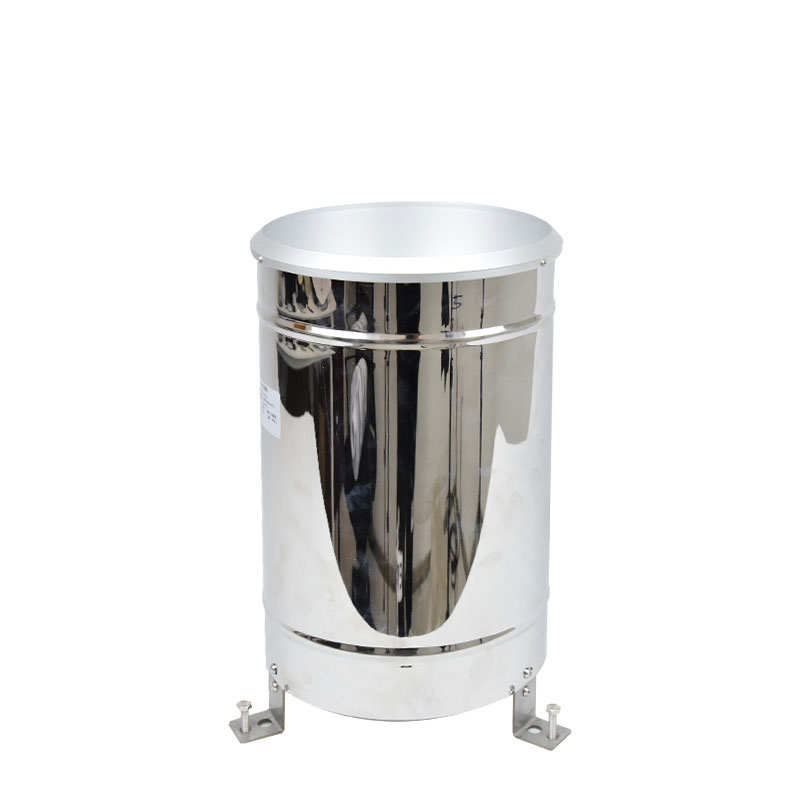
Stainless Steel Tipping Bucket Rain Gauge employs a standard Φ200mm diameter aperture and a bistable tipping bucket structure. Each bucket triggers tipping when it receives 0.2mm of rainfall. It supports Modbus 485 signal output and ±2% measurement error, making it suitable for monitoring liquid precipitation in meteorological, hydrological, and agricultural sectors.
Stainless Steel Tipping Bucket Rain Gauge is a hydrological and meteorological measuring instrument that converts mechanical tipping motion into electrical pulse signals. Its core operation relies on the precise control of its mechanical bistable structure. The sensor top features a Φ200mm international standard diameter rain-collecting inlet. Rainwater is collected through a funnel and then injected into the metering tipping bucket. The tipping bucket is divided into two equal-volume chambers by a central partition. When the rainfall reaches the preset value of 0.2mm and the corresponding water volume is approximately 6.28ml, the tipping bucket automatically tipes due to the shift in its center of gravity, instantly emptying the rainwater inside, while the other tipping bucket enters the water-receiving state. Each cyclic tipping action triggers the internal magnet and dry reed switch, generating a pulse signal for digital measurement and output of rainfall.
For data transmission, the sensor uses a Modbus 485 communication interface and follows the standard MODBUS-RTU protocol, capable of outputting pulse signals or digital rainfall values, suitable for applications such as automatic weather stations, hydrological monitoring systems, and agricultural irrigation management. The sensor operates at temperatures from 0 to 50°C, tolerates humidity below 95% without condensation, and has a measurement error controlled within ±2%. Its rainfall intensity measurement range is 0 to 4 mm/min, with a maximum permissible instantaneous rainfall intensity of 8 mm/min, covering monitoring needs from conventional precipitation to moderate to heavy rain.
Mechanically, Stainless Steel Tipping Bucket Rain Gauge consists of a rain inlet assembly, a water funnel, a metering tipping bucket assembly, a leveling device, a dry reed switch, and a control circuit board. The rain-collecting inlet is made of matte stainless steel or ABS engineering plastic, with a blade angle of 40° to 45° and a smooth, burr-free inner wall to ensure smooth rainwater flow without splashing. The tipping bucket features a three-dimensional streamlined structure, allowing for smooth water flow and providing self-cleaning capabilities to reduce the impact of dust and debris on metering accuracy. During installation, the tipping bucket's balance must be calibrated using a leveling device to ensure it can tip sensitively when the water level reaches the threshold. Due to its reliable structure, low maintenance cost, and ability to output counting signals without external power supply, this sensor is widely used in precipitation observation at meteorological stations, watershed rainfall monitoring at hydrological stations, water volume statistics for farmland irrigation, and early warning systems for urban flooding and flash floods.
Present weather and visibility sensor is a professional meteorological device used for automatically identifying and observing weather phenomena such as fog, rain, snow, mixed precipitation, and clear skies, and for measuring current visibility. It enables fully automatic and accurate recording of weather type, visibility, and precipitation....
These instruments utilize the forward scattering method to calculate the total extinction coefficient of air, accurately converting it into atmospheric visibility values. They can automatically identify various weather phenomena, are highly protective, consume little power, and are adaptable t...
High-altitude migratory pests refer to a category of pests that rely on their own flight capabilities or high-altitude air currents to carry out long-distance and large-scale migrations during their growth and development. For example, the fall armyworm and the East Asian locust can fly at altitudes...
The measurement of wind speed and direction is of great importance in many fields, such as weather forecasting, high - speed railways, wind power generation, industrial and agricultural production, and scientific research.In the traditional meteorological field, the measurement of wind speed and dir...


 Skype
Skype
 whatsapp
 mail
mail