Tianyi Sensor IOT Technology Co., Ltd
Sales Manager:Ms. Emily Wang
Cel,Whatsapp,Wechat:+86 15898932201
Email:info@fengtutec.com
Add:No. 155 Optoelectronic Industry Accelerator, Gaoxin District, Weifang, Shandong, China


Sales Manager:Ms. Emily Wang
Cel,Whatsapp,Wechat:+86 15898932201
Email:info@fengtutec.com
Add:No. 155 Optoelectronic Industry Accelerator, Gaoxin District, Weifang, Shandong, China
time:2025-08-25 08:58:28 source:Weather Station viewed:401 time
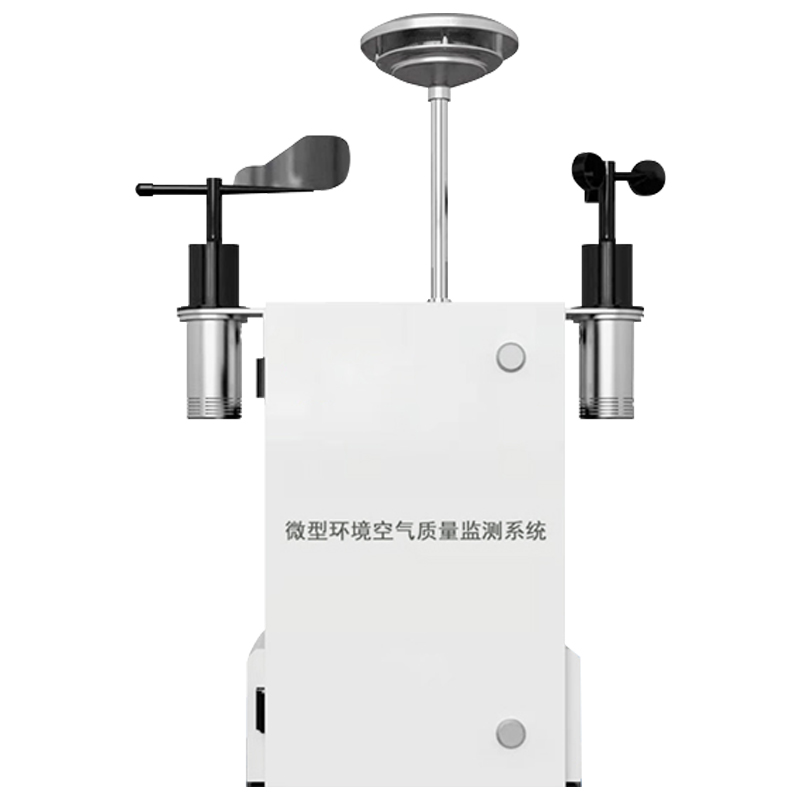
As a real-time online monitoring terminal, the Air Quality Monitoring Station integrates multiple technologies including online monitoring, data collection and wireless transmission. It can accurately conduct monitoring on pollution indicators such as PM2.5, PM10 and the five meteorological parameters. It has an extremely wide scope of application, which can be used for environmental monitoring in enterprise chemical parks, environmental control in urban and municipal fields, air quality monitoring in mobile scenarios, environmental supervision in traffic-polluted areas, and also can cover the air quality monitoring needs of places like residential areas, schools and hospitals.
In the structure of this monitoring station, the perception layer undertakes the task of comprehensive and intelligent perception of environmental elements, mainly composed of micro-station detection modules, data collection main control equipment and installation and fixing devices. The micro-station detection module can monitor key parameters such as gaseous pollutants, particulate matter, temperature and humidity, while the installation and fixing devices are used for stable installation of various instruments and equipment.
The data transmission layer has diversified transmission capabilities, supporting multiple transmission methods such as GPRS, 3G, 4G, 5G and NBIoT. It is not only easy to operate and highly flexible, but also can securely store information such as data and equipment working status.
The application service layer is divided into four specific parts: the first is application display, which presents the platform interface to users through different channels such as APP mobile terminals, WEB terminals and LED large screens; the second is the application instance layer, whose core function is to conduct monitoring, early warning and analysis on various parameters in grid-based monitoring areas and calculate the diffusion curve trend of pollutants; the third is the application support layer, which uses technologies such as cloud computing and big data to integrate and analyze massive environmental information across regions and industries, thereby realizing the storage, real-time processing and in-depth mining and analysis of massive data; the fourth is the basic data layer, mainly used for storing information such as regional and equipment data, real-time monitoring data and historical data. It can effectively solve problems such as scattered information resource management, messy storage of basic information, low standardization level, single applicability of application services and difficulty in sharing.
Weather conditions have always been a key factor affecting crop growth and harvest. Alas! Frequent meteorological disasters have brought great crises to agriculture!Drought, a common meteorological disaster, results from prolonged precipitation scarcity, leading to soil water shortage and dry air. C...
Stainless Steel Tipping Bucket Rain Gauge employs a standard Φ200mm diameter aperture and a bistable tipping bucket structure. Each bucket triggers tipping when it receives 0.2mm of rainfall. It supports Modbus 485 signal output and ±2% measurement error, making it suitable for monitoring li...
The problem of water pollution is serious. Governments, environmental protection agencies, and scientific research institutions need to promptly and accurately grasp the water quality status to formulate effective water resource protection and pollution control policies. However, the detection scope...
Weighing Rain Gauge uses a C6 high-precision weighing sensor with a full-range accuracy of 0.1mm. Its separate internal and external independent grounding structure, combined with a stainless steel outer protective casing, effectively resists wind interference, making it suitable for monitorin...


 Skype
Skype
 whatsapp
 mail
mail