Tianyi Sensor IOT Technology Co., Ltd
Sales Manager:Ms. Emily Wang
Cel,Whatsapp,Wechat:+86 15898932201
Email:info@fengtutec.com
Add:No. 155 Optoelectronic Industry Accelerator, Gaoxin District, Weifang, Shandong, China


Sales Manager:Ms. Emily Wang
Cel,Whatsapp,Wechat:+86 15898932201
Email:info@fengtutec.com
Add:No. 155 Optoelectronic Industry Accelerator, Gaoxin District, Weifang, Shandong, China
time:2026-07-29 10:46:04 source:Weather Station viewed:34 time
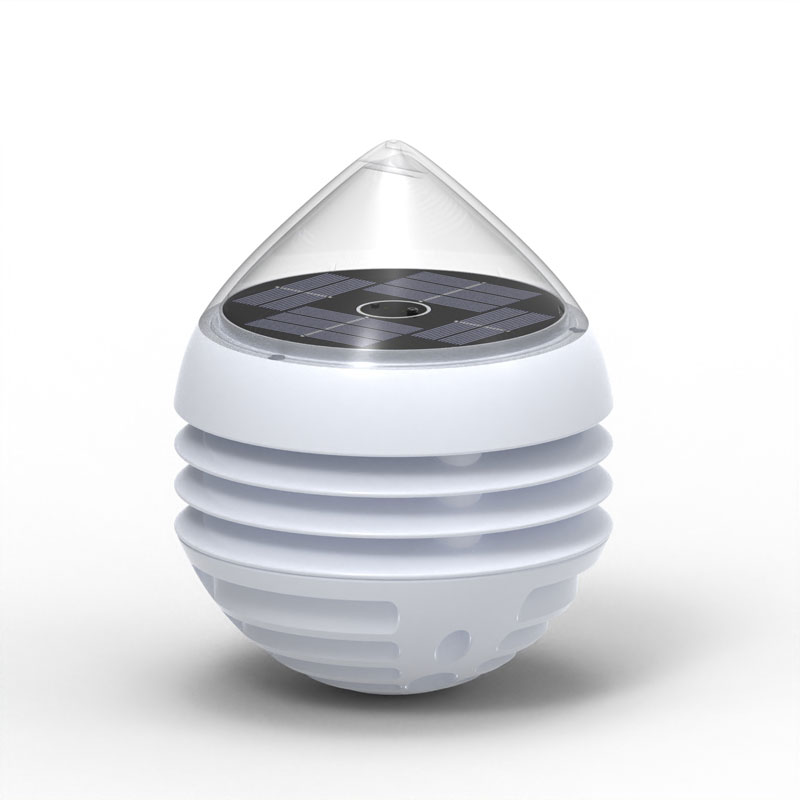
instrument to measure rainfall uses a PVDF piezoelectric film to sense raindrop impact. An embedded AI neural network accurately distinguishes raindrop signals, effectively eliminating interference from sand, dust, and vibration. The device has no mechanical parts, requires no maintenance, and can operate in all weather conditions. It is widely used in meteorology, hydrology, transportation, agriculture, and other fields. Measurement accuracy is ≤±4%, resolution is 0.01mm.
instrument to measure rainfall is a novel rainfall monitoring device based on the piezoelectric effect. Unlike traditional tipping bucket rain gauges that rely on mechanical flipping for counting, it uses a PVDF piezoelectric film as its core rain-sensing device. When a raindrop impacts the sensor surface, the raindrop's kinetic energy is converted into mechanical vibration. The piezoelectric element converts this vibration into an electrical signal in real time. The device analyzes the frequency and amplitude of the voltage waveform changes to calculate the weight of a single raindrop, and then calculates the cumulative rainfall and rainfall intensity.
In terms of anti-interference capability, instrument to measure rainfall uses an embedded AI neural network to distinguish raindrop signals, effectively eliminating false triggers caused by non-rainfall factors such as gravel, dust, and vibration. The device adopts a fully solid-state integrated design with no mechanical parts or exposed components, physically eliminating the impact of debris such as leaves, dust, and insects on data accuracy. The raindrop contact surface has an arc-shaped design that does not store rainwater; raindrops fall off immediately, eliminating the need for manual on-site cleaning even after prolonged use.
instrument to measure rainfall has a measurement range of 0-4mm/min, a measurement accuracy of ≤±4%, a resolution of 0.01mm, and a sampling frequency of less than 1 second. The device uses an RS485 communication interface and MODBUS protocol, supports DC12V power supply, consumes only 0.12W, and can operate stably in all weather conditions within a temperature range of -40 to 85℃ and a humidity range of 0 to 100%RH. After installation, the device has an automatic leveling function, eliminating the need for manual on-site calibration.
instrument to measure rainfall rain gauges are widely used in meteorological and environmental monitoring, hydrological and water conservancy comprehensive monitoring stations, traffic and road monitoring, agricultural and forestry irrigation, wind power generation, and other sectors for remote sensing of precipitation, precipitation intensity, and precipitation start and end times. In automatic hydrological monitoring and reporting systems such as flood control scheduling, water supply management, and power station reservoir water level monitoring, instrument to measure rainfall rain gauges, with their advantages of maintenance-free operation, high precision, and low power consumption, have become an important alternative to traditional tipping bucket rain gauges. Their compact size and easy installation make them particularly suitable for long-term stable operation in unattended field environments.

Weighing Rain Gauge is based on weighing principle technology, utilizing high-precision sensors to real-time measure the pressure change of precipitation on the receiving container, thereby accurately calculating precipitation intensity. It can measure both liquid and solid precipitation, as well as mixed solid-liquid precipitation, suitable for long-term automatic monitoring needs in hydrology, meteorology, forestry, and other departments....
The visibility meter uses forward scattering to measure the total extinction coefficient of the air and calculate the current visibility. It has a range of 10km, a resolution of 1m, and an error of ±2% for distances ≤2km, ±5% for distances between 2km and 10km, and ±10% for distances great...
3D radar life detector integrates Ultra-Wideband (UWB) radar, millimeter-wave radar, and biomedical engineering technologies. By utilizing the Doppler effect to capture human breathing and heartbeat signals, it can penetrate non-metallic walls up to 50 cm thick, enabling 3D spatial localization and...
Microwaves refer to electromagnetic waves with frequencies ranging from 300MHz to 300GHz and wavelengths from 1 millimeter to 1 meter. Due to their high frequency and short wavelength, they have strong directivity and penetrating power, enabling stable propagation under different meteorological cond...


 Skype
 whatsapp
 mail