Tianyi Sensor IOT Technology Co., Ltd
Sales Manager:Ms. Emily Wang
Cel,Whatsapp,Wechat:+86 15898932201
Email:info@fengtutec.com
Add:No. 155 Optoelectronic Industry Accelerator, Gaoxin District, Weifang, Shandong, China


Sales Manager:Ms. Emily Wang
Cel,Whatsapp,Wechat:+86 15898932201
Email:info@fengtutec.com
Add:No. 155 Optoelectronic Industry Accelerator, Gaoxin District, Weifang, Shandong, China
time:2025-11-27 11:00:45 source:Weather Station viewed:381 time
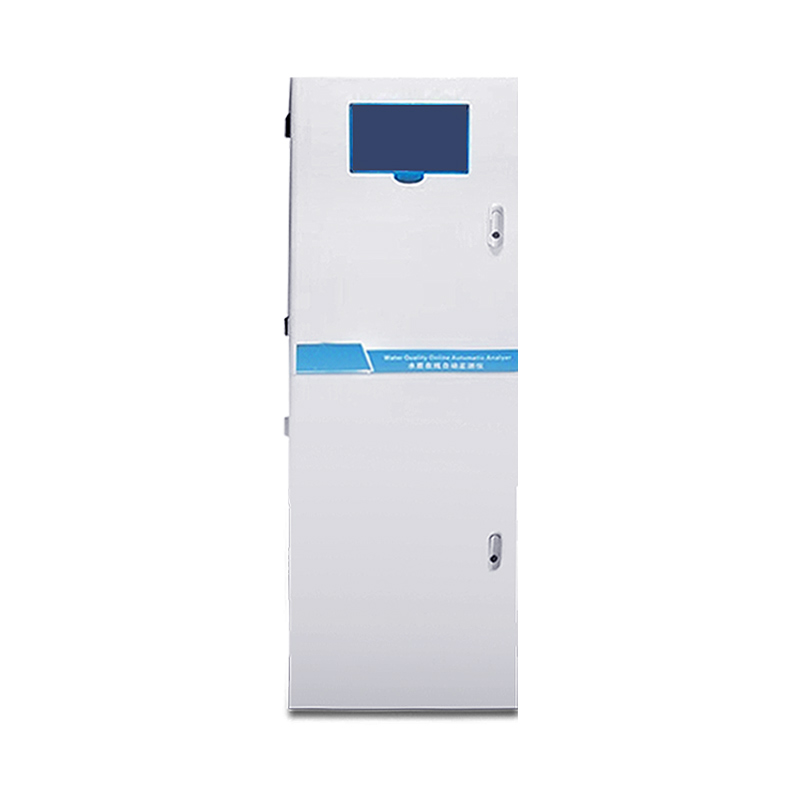
The COD Analyzer is a professional instrument that uses the potassium dichromate spectrophotometric method to determine the chemical oxygen demand (COD) of water. It is suitable for online monitoring of surface water, groundwater, industrial wastewater, and domestic sewage. The instrument complies with current environmental protection standards and can accurately detect the COD index of various water bodies, providing reliable data support for water quality assessment.
The COD Analyzer is an important instrument in the field of water quality analysis, primarily used to measure the chemical oxygen demand in water samples. This index reflects the degree of pollution of the water body by reducing substances and is a key parameter for evaluating water quality. The instrument is designed based on the principle of the potassium dichromate method and achieves accurate measurement through spectrophotometric technology.
In terms of technical principles, the COD Analyzer employs the classic potassium dichromate digestion method. The water sample is mixed with a potassium dichromate solution in a strong acid medium and undergoes a digestion reaction under high-temperature conditions. During this process, the reducing substances in the water sample are oxidized by potassium dichromate, and the chromium ions are converted from hexavalent to trivalent. The instrument measures the absorbance value of trivalent chromium ions at a specific wavelength using a spectrophotometric system and calculates the COD concentration according to Beer's Law.
The operation process of this monitoring instrument includes several standardized steps. First, a representative water sample is collected, and after appropriate pretreatment, it is injected into the reaction tube. Then, potassium dichromate solution and silver sulfate catalyst are added, mixed evenly, and sent to the digestion system. The digestion process is carried out under set temperature and time conditions, usually ranging from 15 to 120 minutes. After digestion, the system automatically cools the sample and measures the absorbance value, and finally calculates the COD concentration value based on the calibration curve.
In terms of application scope, the COD Analyzer is suitable for various water quality monitoring scenarios. Environmental monitoring departments use it to monitor the pollution status of surface water bodies, municipal wastewater treatment plants use it for real-time monitoring of influent and effluent water quality, industrial enterprises use it to monitor the treatment effect of production wastewater, and aquaculture enterprises also use it to maintain a suitable environment for aquaculture water bodies. This wide applicability makes it a fundamental instrument for water quality monitoring.
The technical characteristics of the instrument are mainly reflected in its measurement performance. The potassium dichromate method used has the advantages of high oxidation efficiency and good reproducibility, accurately reflecting the degree of organic pollution in the water sample. The spectrophotometric detection system ensures the precision and accuracy of the measurement. The automated digestion and measurement process reduces human operational errors. Some models also feature automatic dilution functions, adapting to different concentration ranges of samples.
Several technical points need attention during use. Sampling should avoid the effects of water stratification to ensure sample representativeness. For water samples containing chloride ions, mercuric sulfate needs to be added for masking to prevent falsely high measurement results. Digestion temperature and time must be strictly controlled to ensure complete reaction. Regular calibration with standard solutions is necessary to verify the instrument's accuracy. These measures all contribute to obtaining reliable monitoring data.
The maintenance of the COD Analyzer instrument requires standardized procedures. The reaction tubing needs regular cleaning to prevent the accumulation of precipitates. The cuvette should be kept optically clean to avoid affecting photometric measurements. The reagent storage system must be sealed to prevent reagent deterioration. The temperature control system needs regular calibration to ensure the accuracy of the digestion temperature. Establishing comprehensive maintenance records helps in timely detection and resolution of problems.
The role of this monitoring instrument in environmental management is multifaceted. Continuous monitoring allows for understanding the patterns of water pollution changes, providing basic data for environmental assessment. In wastewater treatment processes, real-time monitoring results can guide process adjustments and optimize treatment efficiency. For polluting enterprises, monitoring data helps them achieve compliance with discharge standards and fulfill environmental responsibilities. The accumulation of long-term monitoring data also provides a scientific basis for watershed management.
With technological advancements, the performance of the COD Analyzer instrument is continuously improving. Newer models show significant improvements in measurement speed, automation, and data processing. Some advanced models have implemented remote monitoring and intelligent early warning functions, greatly improving monitoring efficiency. The application of energy-saving designs also reduces operating costs, making the equipment more suitable for long-term continuous operation.
In practical applications, the interpretation of monitoring data requires professional knowledge. COD values need to be analyzed in conjunction with other water quality indicators to comprehensively assess water quality. The COD composition of water samples from different sources may vary, requiring operators to understand the characteristics of the water samples. For abnormal data, a comprehensive analysis should be conducted considering the sampling situation and instrument status to ensure data reliability.
Based on the core principle of ultrasonic detection, 3D anemometers accurately capture wind speed and direction data in three-dimensional space. They offer advantages such as high precision, real-time response, and non-contact measurement, making them suitable for various harsh conditions and...
In terms of application value, the popularization of integrated dust monitoring sensors like the FT-WQX8 is transforming traditional environmental monitoring models. In the past, single-parameter monitoring devices required separate deployment and maintenance. Not only did this result in high initia...
A weather phenomenon sensor is an optical measuring instrument that uses the forward scattering principle. It emits an infrared pulse beam into the atmosphere and receives the scattering signals from aerosol particles, calculating the extinction coefficient to determine the visibility value. T...
The earthquake rescue safety monitoring instrument consists of a control terminal, an aftershock monitor, and an audible and visual alarm. It uses a triaxial tilt sensor to monitor real-time angular changes in walls, beams, and other structural elements with an accuracy of 0.1°. When a thresh...


 Skype
Skype
 whatsapp
 mail
mail