Tianyi Sensor IOT Technology Co., Ltd
Sales Manager:Ms. Emily Wang
Cel,Whatsapp,Wechat:+86 15898932201
Email:info@fengtutec.com
Add:No. 155 Optoelectronic Industry Accelerator, Gaoxin District, Weifang, Shandong, China


Sales Manager:Ms. Emily Wang
Cel,Whatsapp,Wechat:+86 15898932201
Email:info@fengtutec.com
Add:No. 155 Optoelectronic Industry Accelerator, Gaoxin District, Weifang, Shandong, China
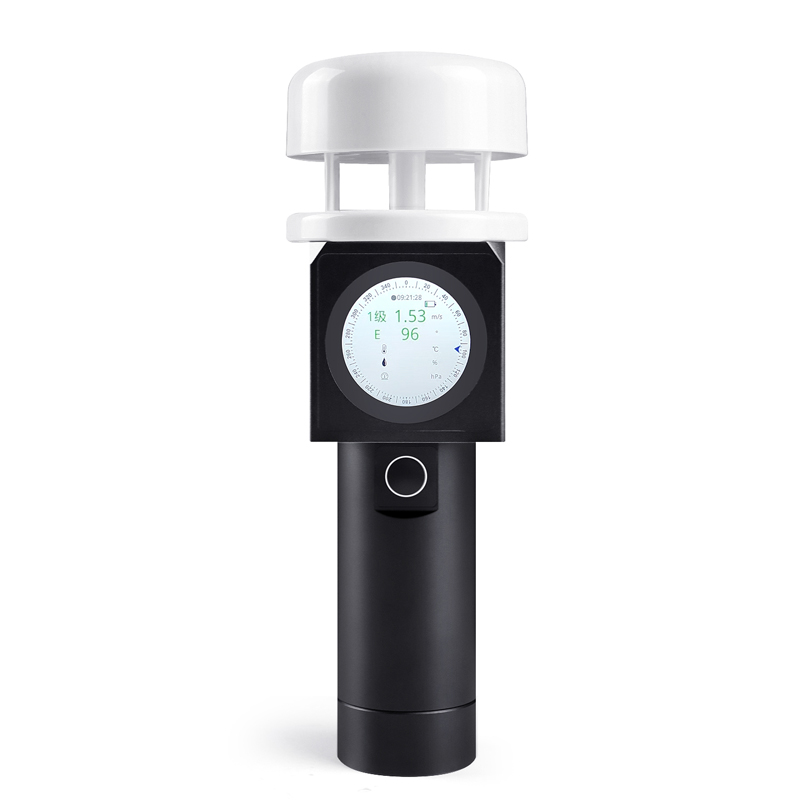
Model:FT-SQ2A
Brand:tianyi
1、Ultrasonic Portable Mini Wind Meter Product Introduction
Ultrasonic Portable Mini Wind Meter is a rechargeable, compact wind speed monitoring device that uses ultrasonic waves to measure wind speed.Ultrasonic Portable Mini Wind Meter series condenses laboratory-grade weather monitoring technology into a handheld device, adding a handle, power supply, display, wireless data transmission module, and software. Integrating three core technologies: ultrasonic sensing, multi-module integration, and intelligent IoT, it enables one-stop collection of accurate weather data for outdoor scenarios.
We've incorporated specialized designs tailored to the operational needs and environments of handheld weather stations. For example, a display allows on-site observers to directly read data, while also storing data on a TF card for at least 365 days of monitoring data. A dedicated app uses Bluetooth for data transmission, allowing users to receive real-time monitoring data on their phone.
Specially designed handle (made of an all-aluminum alloy) is lightweight and easy to hold with one hand. The bottom mounting thread allows for tripod mounting, making it ideal for field inspections.
2、Ultrasonic Portable Mini Wind Meter Key Features
No moving parts, zero wear
Maintenance-free, long service life
Uses a reflective ultrasonic probe for a more compact design
Powered by a removable standard 18650 rechargeable lithium battery
Optional sensors for temperature, humidity, air pressure, radiation, and PM2.5
Built-in Bluetooth transmission module
App data display interface
3、Ultrasonic Portable Mini Wind Meter Typical Applications
Handheld Multi-factor Meteorological Monitoring
Mobile Inspection
Power Safety Inspection
Ship, Dock, and Navigation Inspection
Urban Air Quality Inspection
4、Ultrasonic Portable Mini Wind Meter Technical Parameters
Wind Speed: 0-40m/s
Wind Force Level: 1-12
Wind Direction: 0-359°
Wind Direction: East, South, West, North, Northeast, Southeast, Southwest, Northwest
Temperature: -40°C to +80°C (optional)
Humidity: 0-100% (optional)
Air Pressure: 300-1100hPa (optional)
Altitude: Mean Sea Level (optional)
Illuminance: 0-200,000 lux (optional)
Radiance: 0-2000W/m² (optional)
UV Index: 0-15 (optional) )
PM2.5/PM10: 0-2000 μg/m³ (optional)
Data Display: Mobile App/1.6-inch Circular Touchscreen
Display: Touchscreen
Data Storage: TF Card
Charging/Data Port: Power adapter, 5V/2A output/Type-C port
Power Requirements: 3x18650 rechargeable lithium batteries
Battery Operating Time: Fully charged (3x18650 lithium batteries), up to 24 hours of operation (depending on weather conditions)
Dimensions: Ø82x249mm
Stainless Steel Tipping Bucket Rain Gauge is a hydrometeorological instrument used to measure natural rainfall,It converts precipitation into a digital signal output, offering high detection accuracy and strong anti-interference capabilities, making it suitable for meteorological monitoring and hydrological data acquisition....
Modern agriculture is transitioning from extensive management to precision agriculture and smart agriculture. Data-driven decision-making is employed to achieve the goals of water conservation, fertilizer reduction, pesticide reduction, yield increase, and quality improvement. Meteorological data is...
Every flood season, heavy rainfall occurs frequently, causing water levels in rivers and lakes to rise rapidly, and the risk of flood disasters increases significantly. During such a special period, the Radar Current Meter, as a professional hydrological monitoring device, becomes an important tool...
As a crucial component of the power system, transmission lines undertake the important task of efficiently transmitting the electrical energy generated by power plants to various regions. By constructing a vast transmission network, electrical energy can travel over long distances to meet the electr...


 Get a Free Quote
 Skype
Skype
 whatsapp
 mail
mail