Tianyi Sensor IOT Technology Co., Ltd
Sales Manager:Ms. Emily Wang
Cel,Whatsapp,Wechat:+86 15898932201
Email:info@fengtutec.com
Add:No. 155 Optoelectronic Industry Accelerator, Gaoxin District, Weifang, Shandong, China


Sales Manager:Ms. Emily Wang
Cel,Whatsapp,Wechat:+86 15898932201
Email:info@fengtutec.com
Add:No. 155 Optoelectronic Industry Accelerator, Gaoxin District, Weifang, Shandong, China
time:2026-06-16 15:01:37 source:Weather Station viewed:93 time
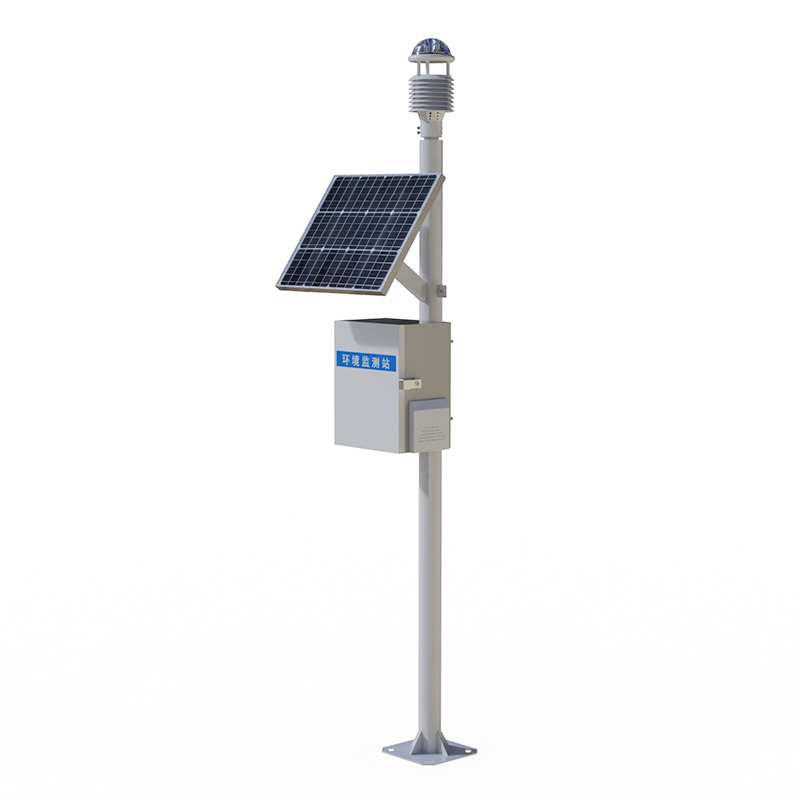
The integrated weather station is a highly integrated, low-power, and quickly installable high-precision automatic meteorological observation device. It employs a twelve-element integrated sensor to monitor meteorological elements such as wind speed, wind direction, temperature, humidity, air pressure, optical rainfall, PM2.5, PM10, CO, NO2, SO2, and O3 in real time.
The integrated weather station is a highly integrated, low-power, quickly installable, and easy-to-use high-precision automatic meteorological observation device for field monitoring. The device consists of meteorological sensors, a data logger, a solar power system, a pole support, and a cloud platform. The device requires no debugging, can be quickly deployed, and is widely used in meteorology, agriculture, forestry, environmental protection, marine science, airports, ports, scientific research, and educational institutions.
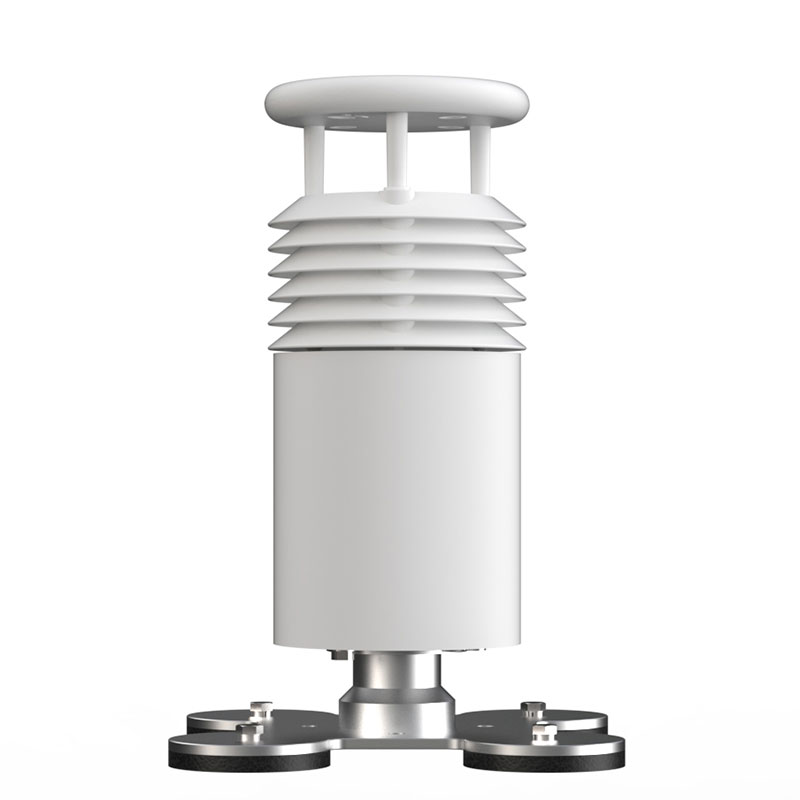
This integrated weather station innovatively employs a twelve-element integrated sensor, enabling real-time observation of meteorological elements such as wind speed, wind direction, temperature, humidity, air pressure, optical rainfall, PM2.5, PM10, CO, NO2, SO2, and O3, achieving continuous online monitoring of outdoor meteorological parameters 24 hours a day. The sensor features a top-cover concealed ultrasonic probe design, avoiding interference from rain and snow accumulation and natural wind obstruction. Wind speed and direction measurement utilizes the principle of emitting continuously variable frequency ultrasonic signals, detecting wind speed and direction by measuring the relative phase. It has no starting wind speed limitation, can operate at zero wind speed, and has no angle limitation, enabling 360° omnidirectional measurement.
Compared to traditional ultrasonic weather stations, this integrated weather station overcomes the need for a high-precision timer, avoiding measurement inaccuracies caused by sensor start-up delay, demodulation circuit delay, and temperature changes. The sensor housing is made of imported ASA material, effectively resisting environments such as salt spray, achieving a protection level of IP65 or higher.
In terms of data transmission, the integrated weather station comes standard with GPRS networking and offers optional RJ45, Ethernet, 4-20mA, LoRa transparent transmission, 4G transparent transmission, Bluetooth, and 485 to USB transmission. The equipment supports solar power, equipped with lead-acid batteries and an MPPT automatic power point tracking charger, improving efficiency by 20%. Data can be output to the user at once via a digital communication interface, displaying twelve parameters simultaneously.
Regarding data management, the integrated weather station's accompanying host computer software supports standalone PC-based data reception, storage, viewing, and analysis, as well as serial port data reception, processing, and display. The system supports SMS alarm functionality, sending alarm SMS messages to designated mobile phones when data limits are exceeded. This equipment is widely used in meteorological observation, field research, agricultural guidance, and environmental protection.
Meteorology and soil moisture are two fundamental elements in agriculture. Meteorology determines the "timing" of agriculture, while soil moisture reflects the "favorable geographical conditions". Together, they form the environmental framework for crop growth.The dynamic changes...
The visibility meter uses the forward scattering method to measure the total extinction coefficient of air and calculate the current visibility. It features an integrated, portable design, a high-brightness touchscreen, and built-in large-capacity storage. The entire unit is waterproof, dustpr...
Underwater search and rescue robot is an observation-class underwater remotely operated vehicle (ROV) that transmits real-time video or still images of the underwater environment back to the surface via a high-definition camera and multi-beam sonar. Its multi-beam imaging sonar enables it to p...
Developed based on the principles of charge induction and MEMS technology, this lightning warning system utilizes a combined electric field differential and threshold-based algorithm to effectively prevent false alarms caused by adverse weather conditions—such as rain, strong winds, and blowi...


 Skype
Skype
 whatsapp
 mail
mail