Tianyi Sensor IOT Technology Co., Ltd
Sales Manager:Ms. Emily Wang
Cel,Whatsapp,Wechat:+86 15898932201
Email:info@fengtutec.com
Add:No. 155 Optoelectronic Industry Accelerator, Gaoxin District, Weifang, Shandong, China


Sales Manager:Ms. Emily Wang
Cel,Whatsapp,Wechat:+86 15898932201
Email:info@fengtutec.com
Add:No. 155 Optoelectronic Industry Accelerator, Gaoxin District, Weifang, Shandong, China
time:2026-01-04 11:19:19 source:Weather Station viewed:395 time
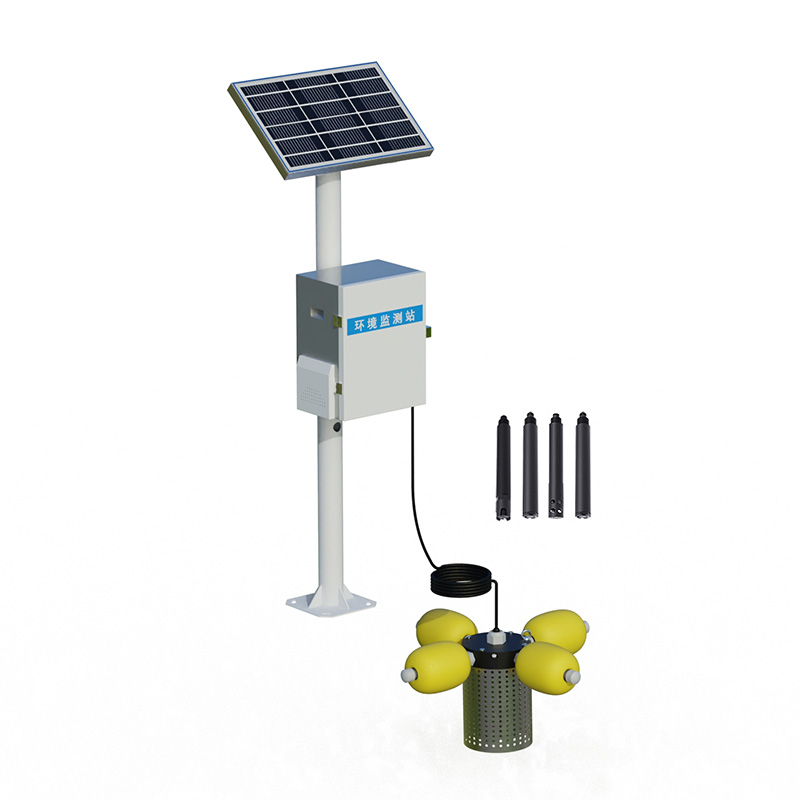
Water quality monitoring equipment, centered around sensors for water temperature, pH, dissolved oxygen, and turbidity, can collect and analyze water data in real time. This equipment is widely used in various water environment monitoring applications, including aquaculture, wastewater treatment, reservoirs, rivers, and drinking water sources.
Water quality monitoring equipment is a real-time data acquisition and analysis system composed of multiple water quality sensors. As a key tool for water conservancy, environmental protection, and related industries, its function is to continuously and automatically acquire multiple physical and chemical parameters of water bodies and convert the data into readable information, thereby accurately reflecting the real-time status and changing trends of water quality.
The core of this equipment is a series of dedicated water quality sensors. Each sensor is responsible for monitoring a specific water quality indicator. Common core parameters include water temperature, conductivity, pH value, dissolved oxygen concentration, ammonia nitrogen content, and turbidity. These sensors operate through different electrochemical or optical principles. For example, the pH sensor uses a glass electrode to measure hydrogen ion activity, dissolved oxygen sensors often use fluorescence or polarographic methods, and turbidity sensors are based on the principle of light scattering. They are integrated into a probe or multi-probe combination and can be directly immersed in the water body to be measured.
The equipment's workflow is based on data acquisition and transmission. Various sensors continuously sense the characteristics of the surrounding water and convert physical or chemical signals into standard electrical signals. These signals are received by a connected data acquisition unit. The acquisition unit amplifies, filters, and performs analog-to-digital conversion on the signals, calculating the corresponding parameter values, such as milligrams per liter of dissolved oxygen or the specific pH value. The processed data is stored in local memory and simultaneously transmitted to a remote monitoring center or cloud platform through wired or wireless communication modules, such as 4G, LoRa, or fiber optic networks. Users can view real-time data, historical curves, and statistical reports on a computer or mobile terminal.
This system has a wide range of applications. In aquaculture, real-time monitoring of dissolved oxygen, pH, and ammonia nitrogen is crucial for ensuring the healthy growth of fish; the equipment can provide timely warnings of water quality deterioration and guide aeration and water changes. In wastewater treatment, monitoring the pH, turbidity, and ammonia nitrogen at the inlet and outlet is a key basis for evaluating the effectiveness of the treatment process and ensuring compliance with discharge standards. In natural water body management, long-term online monitoring of reservoirs, rivers, and lakes helps to understand the conditions of water eutrophication and black and odorous water bodies, providing data support for water resource protection and ecological restoration.
Furthermore, this equipment is also suitable for monitoring drinking water safety from water sources to water treatment plants, as well as for surveying various water bodies such as groundwater and landscape water. Its value lies in transforming traditional time-consuming and labor-intensive manual sampling and laboratory analysis into an efficient, automated, and information-based monitoring model. By setting parameter alarm thresholds, the system can immediately issue alerts when data is abnormal, saving time for environmental risk management and emergency response. The long-term continuous data accumulation provides a solid data foundation for studying water quality change patterns, evaluating the effectiveness of treatment projects, and formulating scientific water environment management policies. Therefore, Water quality monitoring equipment has become an indispensable basic technical infrastructure in modern water environment management and protection systems.
Visibility and Present Weather Sensor uses the forward scattering method to measure the total extinction coefficient of air, calculate visibility, and identify weather phenomena such as fog, rain, and snow, with a recognition rate of ≥95%. The casing is made of anodized aluminum, making the e...
The Air Quality Monitoring Station is a miniaturized product dedicated to real - time online monitoring of the atmospheric environment. It has the capability of simultaneous multi - parameter monitoring, which can accurately measure the concentrations of various pollutants in the atmosphere, such as...
3D Ultrasonic Anemometer can measure the horizontal and vertical wind speed and direction values in three-dimensional space at high frequency, providing accurate and real-time data support for various industries.The working principle of this sensor is based on the propagation characteristics of ultr...
Methane, as the main component of natural gas, is widely used in industrial production and urban gas supply. However, its colorless, odorless, flammable and explosive properties make methane leakage a major safety hazard. The handheld Laser methane telemeteris mainly used for long-distance mea...


 Skype
Skype
 whatsapp
 mail
mail