Tianyi Sensor IOT Technology Co., Ltd
Sales Manager:Ms. Emily Wang
Cel,Whatsapp,Wechat:+86 15898932201
Email:info@fengtutec.com
Add:No. 155 Optoelectronic Industry Accelerator, Gaoxin District, Weifang, Shandong, China


Sales Manager:Ms. Emily Wang
Cel,Whatsapp,Wechat:+86 15898932201
Email:info@fengtutec.com
Add:No. 155 Optoelectronic Industry Accelerator, Gaoxin District, Weifang, Shandong, China
time:2026-07-17 10:12:27 source:Weather Station viewed:40 time
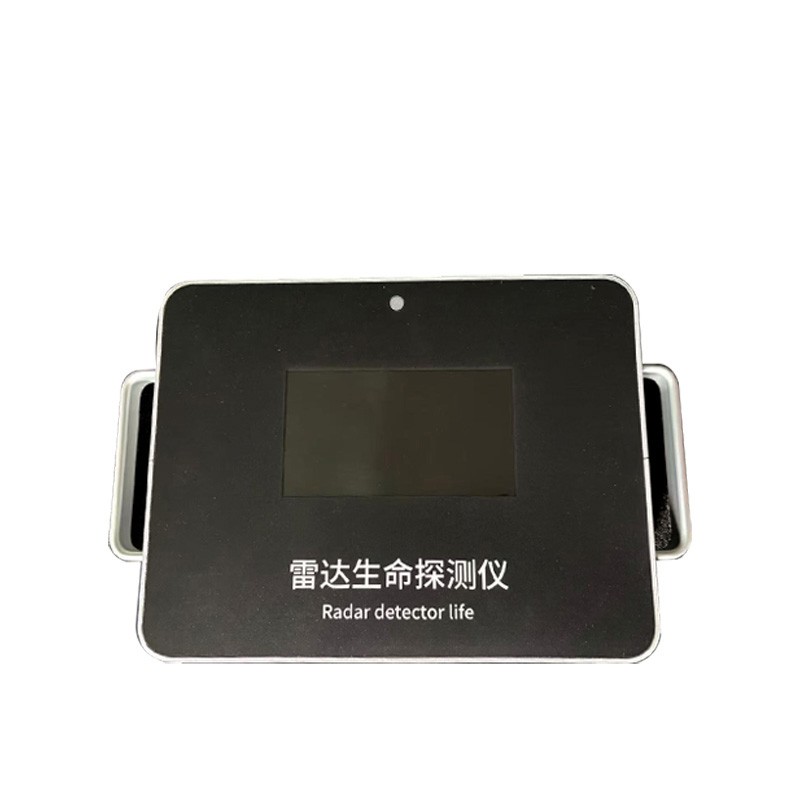
Life Detector Device system integrates ultra-wideband radar technology and biomedical engineering technology. It uses the Doppler effect generated by human breathing and heartbeat to penetrate rubble and search for survivors, with a detection range of up to 30 meters. It is widely used in disaster relief sites such as earthquakes and landslides.
Life Detector Device system is a high-tech life-saving device developed by integrating low-power ultra-wideband radar technology and biomedical engineering technology. According to the definition in the People's Republic of China Fire and Rescue Industry Standard XF 3010—2020, the Life Detector Device system uses bio-radar technology to extract vital signs signals from the phase changes of radar echoes caused by trunk and limb movements or cardiopulmonary activity, determining whether there are living beings inside collapsed building rubble or other obstacles. The device mainly consists of a radar host and a display and control terminal.
The working principle of the Life Detector Device system is based on the time-domain Doppler effect generated by human movement on radar echoes. The device emits nanosecond-level pulsed electromagnetic waves into the rubble, coherently receives and processes the echoes, filtering out echoes from stationary targets such as walls and debris, and only detecting and displaying echoes from moving targets such as limbs and the heart and lungs. This method effectively overcomes some inherent technical limitations of audio, optical, and infrared life detectors in the high-noise environment of disaster sites.
In terms of performance, the Life Detector Device has a detection range of up to 30 meters, centimeter-level resolution, and its detection signal can penetrate non-metallic media such as brick walls, wooden boards, concrete, and soil. The new ultra-wideband Life Detector Device independently developed by China Coal Technology & Engineering Group achieved accurate identification of vital signs such as heartbeat and respiration of multiple subjects within a 30-meter range in field tests within minutes. This detector is suitable for rescue sites in earthquake disasters, geological disasters, and landslide accidents.
The portable Life Detector Device can penetrate obstacles such as building walls and solid rubble to quickly detect, search for, and locate survivors, obtaining real-time information such as their distance and number. It features strong penetration, fast response speed, and high detection accuracy. Currently, rescue operations often utilize 2D radar, which displays two-dimensional images to determine the location and posture of trapped individuals. This lightweight, compact, and easy-to-operate device can be carried by a single soldier and is widely used in fire rescue, military reconnaissance, security checks, and other missions. Life Detector Device helps rescuers quickly determine the presence and location of survivors, reducing the uncertainty of rescue efforts and improving efficiency.
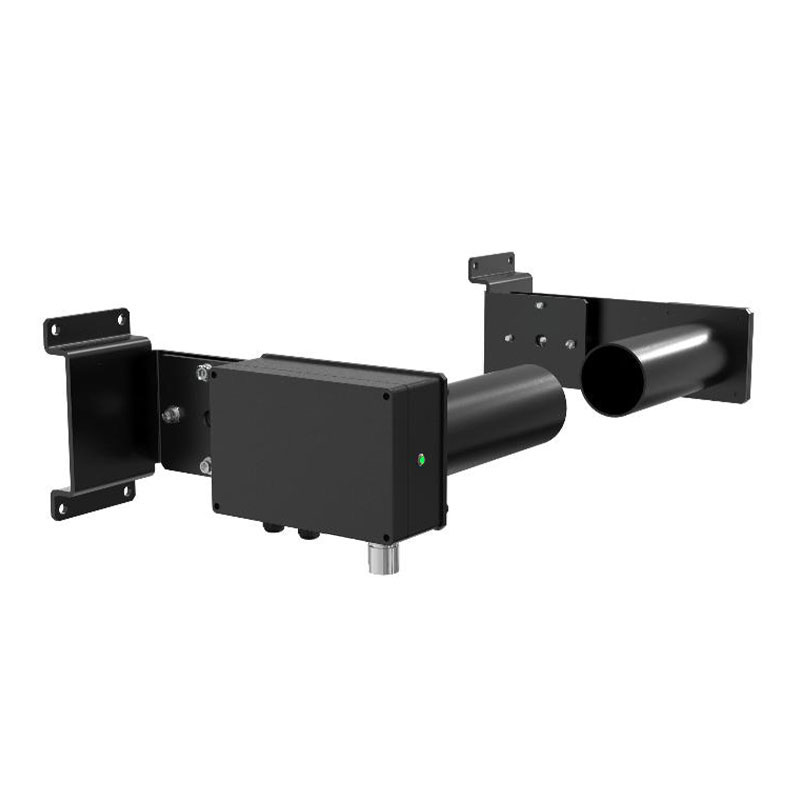
20km Portable Visibility Detector device employs the forward scattering method to calculate current atmospheric visibility by measuring the total extinction coefficient of the air. This equipment can be deployed on highways, mountain roads, and other similar locations to provide real-time visibility information, assisting traffic management departments in adjusting speed limits and issuing warnings. It is widely used in emergency response, road traffic, and meteorological monitoring....
Miniature rain gauge is a device that uses a PVDF piezoelectric film as the core rain-sensing component and integrates an embedded AI neural network algorithm to distinguish raindrop signals. It can remotely measure precipitation, precipitation intensity, and the start and end times of rainfall, achieving real-time and accurate measurement. It is widely used in meteorological monitoring and agricultural irrigation....
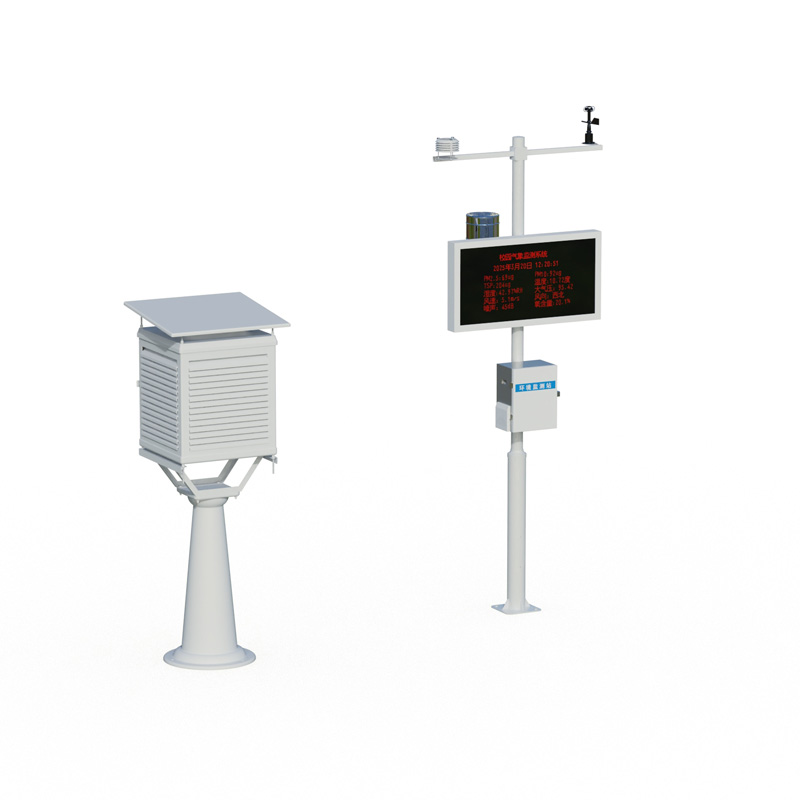
The FT - WQX9 Outdoor Weather Sensors are common devices in the field of meteorological monitoring. Integrating multiple sensors, they can accurately measure data such as wind speed, wind direction, temperature, humidity, air pressure, PM2.5, PM10, rainfall, and solar radiation, providing real - tim...
Good air quality is the fundamental guarantee for a healthy life. To more effectively manage and improve the ambient air quality, air quality monitoring stations have emerged, which have strongly promoted the refined management of ambient air quality.Air quality monitoring stations are compact in si...


 Skype
Skype
 whatsapp
 mail
mail