Tianyi Sensor IOT Technology Co., Ltd
Sales Manager:Ms. Emily Wang
Cel,Whatsapp,Wechat:+86 15898932201
Email:info@fengtutec.com
Add:No. 155 Optoelectronic Industry Accelerator, Gaoxin District, Weifang, Shandong, China


Sales Manager:Ms. Emily Wang
Cel,Whatsapp,Wechat:+86 15898932201
Email:info@fengtutec.com
Add:No. 155 Optoelectronic Industry Accelerator, Gaoxin District, Weifang, Shandong, China
time:2026-08-18 10:31:38 source:Weather Station viewed:33 time
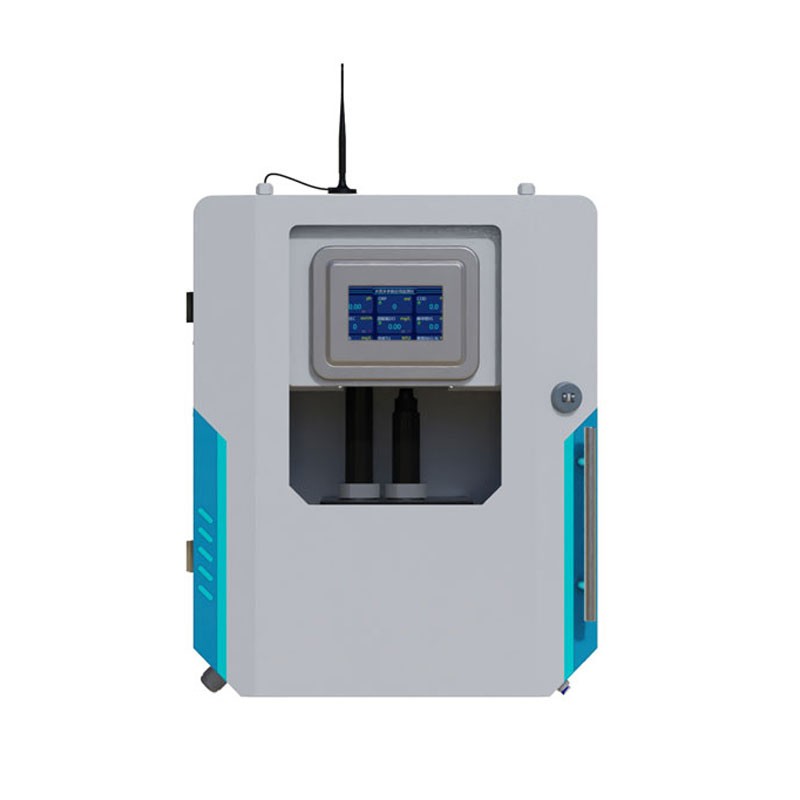
This IoT-enabled water quality monitoring micro-system integrates flow stabilization and venting, sensors, control, and communication units. It can detect indicators such as residual chlorine, pH, and turbidity online, supports cloud data viewing, and is suitable for scenarios such as municipal water supply networks and secondary water supply systems.
The IoT-enabled Drink Water Monitor system is an online monitoring micro-system developed for water supply scenarios. It relies on comprehensive sensors to complete water quality data collection, and is equipped with local data display and historical curve query functions. The overall device consists of four main parts: a flow stabilization and venting unit, an analysis and monitoring sensor unit, a system control unit, and a remote communication unit. It also features a complete power supply module and network communication module, allowing staff to view and analyze various monitoring data in real time on a cloud platform.
The IoT-enabled system Drink Water Monitor is adaptable to pipeline pressure environments up to 0.3 MPa at the end of water supply lines. The sensor module includes sensors for residual chlorine, pH, water temperature, conductivity, and an optional turbidity sensor. Each detection unit employs mature and reliable detection principles. Residual chlorine detection uses an electrode method, with a measurement range of 0–5.00 mg/L and an accuracy of ±5% of the reading. The pH sensor uses an electrochemical salt bridge detection method, covering a range of 0–14 with an accuracy of ±0.1 pH. Water temperature is detected using a high-precision digital sensor, with a range of 0–50℃ and an error controlled within ±0.3℃. Turbidity detection uses a scattered light method, with an optional range of 0–40 NTU. Conductivity is measured using a contact electrode method, with a measurement range of 0–5000 μS/cm, ensuring the accuracy of basic water quality data.
The Internet of Things (IoT) has a wide range of applications, capable of being deployed in urban and rural waterworks, water transmission networks, secondary water supply facilities, and end-point water supply for users. It can also be installed and deployed in indoor swimming pools, large-scale water purification equipment, and direct drinking water supply points. Its real-time, uninterrupted data monitoring capabilities help water plants manage their production processes and provide accurate and effective water quality data for water management and sanitation supervision, reducing the data lag issues associated with traditional manual sampling and testing.
Beyond the water supply industry, the IoT can also meet the needs of various fields such as environmental monitoring, industrial process control, and scientific research. Its compact system structure and collaborative operation allow for direct on-site reading of real-time water quality values and remote data uploading to a cloud platform. Managers can access historical monitoring curves at any time to understand the trends in water quality indicators over a period of time, quickly identify water quality anomalies, and improve the overall efficiency of water quality management.
The standout advantage of the Portable Weather Station is its "portability," a feature directly reflected in its name. Compared with traditional fixed meteorological monitoring equipment, it has a significantly smaller size and lighter weight, with its overall design fully considering the...
The Landslide Early Warning and Monitoring System employs GNSS and Differential RTK technologies to acquire surface displacement data with millimeter-level precision. By integrating data such as displacement and rainfall, the system automatically issues early warning alerts without the need fo...
In underground coal mine operations, ensuring the safety of personnel and the smooth progress of work is of great significance. The industrial product, the Toxic gas detector, as a safety detection device, shoulders the important responsibility of safeguarding the safety of the mine. It can accurate...
The four key aspects of agriculture, namely soil moisture condition, crop seedling condition, pest and disease condition, and disaster condition, are crucial elements in the agricultural production process. The soil moisture condition reflects the water status of the soil, and an appropriate soil mo...


 Skype
Skype
 whatsapp
 mail
mail