Tianyi Sensor IOT Technology Co., Ltd
Sales Manager:Ms. Emily Wang
Cel,Whatsapp,Wechat:+86 15898932201
Email:info@fengtutec.com
Add:No. 155 Optoelectronic Industry Accelerator, Gaoxin District, Weifang, Shandong, China


Sales Manager:Ms. Emily Wang
Cel,Whatsapp,Wechat:+86 15898932201
Email:info@fengtutec.com
Add:No. 155 Optoelectronic Industry Accelerator, Gaoxin District, Weifang, Shandong, China
time:2026-08-10 11:08:14 source:Weather Station viewed:22 time
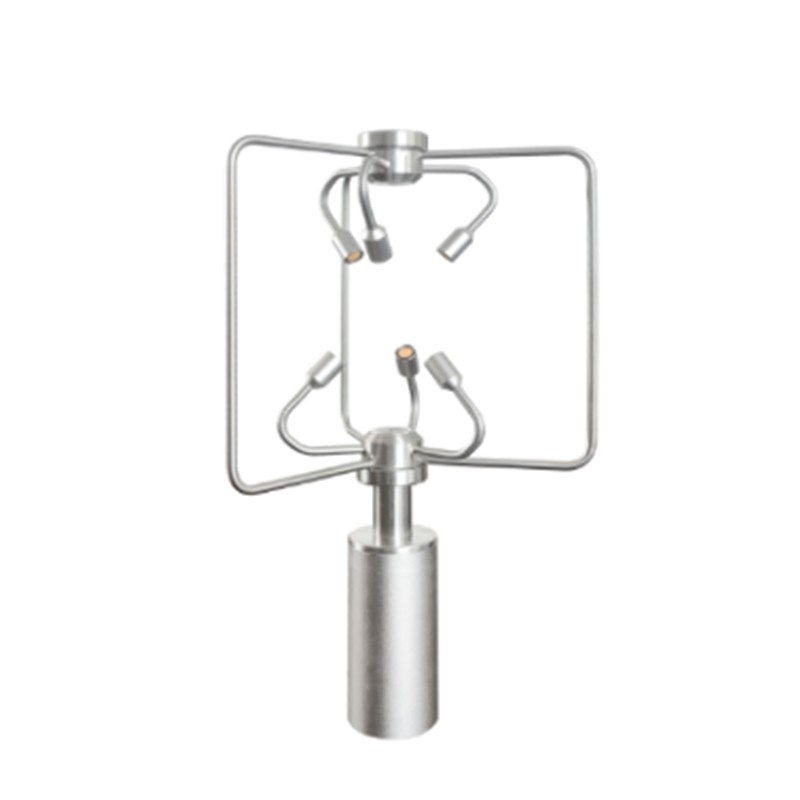
Based on the core principle of ultrasonic detection, 3D anemometers accurately capture wind speed and direction data in three-dimensional space. They offer advantages such as high precision, real-time response, and non-contact measurement, making them suitable for various harsh conditions and widely used in wind speed monitoring across meteorology, environmental protection, energy, and other fields.
3D anemometers are currently mainstream professional gas velocity and wind field monitoring equipment. They rely on the propagation characteristics of ultrasound to complete the measurement, overcoming the structural drawbacks of traditional mechanical anemometers. By emitting ultrasonic signals into the air medium and comparing the difference in propagation speed between stationary and moving gases, they accurately calculate wind speed and direction data in three-dimensional space. The entire measurement process uses a non-contact method, which does not interfere with airflow conditions, effectively ensuring the accuracy and stability of the measurement data.
3D anemometers possess mature and stable hardware configurations and performance parameters. The body is mostly made of wear-resistant and corrosion-resistant materials such as stainless steel, combined with a professional waterproof and dustproof structure, making them adaptable to various harsh outdoor environments such as heavy rain, sandstorms, salt spray, and low temperatures, and suitable for long-term, uninterrupted monitoring operations. The equipment boasts superior measurement performance, with a wind speed measurement range of 0-70 m/s, an accuracy of ±3%, a resolution of 0.1 m/s, and 0-360° full-coverage wind direction measurement with stable accuracy within ±2°, meeting the needs of high-precision monitoring scenarios. Simultaneously, the equipment features fast response, high operational reliability, and a compact, lightweight design, simplifying installation and commissioning, and adaptability to various installation scenarios.
Thanks to its numerous performance advantages, the 3D anemometer has replaced a large number of traditional mechanical anemometers, and its application scenarios continue to expand. In the meteorological field, it can be used for routine meteorological observation and extreme weather monitoring; in the energy field, it is suitable for wind farm resource assessment and operation and maintenance monitoring; and it also widely serves environmental monitoring, agricultural environmental management, scientific research airflow experiments, and emergency meteorological support. Compared to traditional equipment, its features of having no moving parts, requiring no frequent calibration, and having no measurement blind spots significantly reduce subsequent operation and maintenance costs, making it a core device for accurate wind field monitoring across various industries.
The standout advantage of the Portable Weather Station is its "portability," a feature directly reflected in its name. Compared with traditional fixed meteorological monitoring equipment, it has a significantly smaller size and lighter weight, with its overall design fully considering the...
For a long time, air quality indicators have mostly been negative pollutants such as PM2.5 and sulfur dioxide. In contrast, negative oxygen ions, known as "air vitamins" beneficial to human health, serve as important positive indicators for measuring air freshness and ecological constructi...
With the intensification of climate change impacts, the frequency and destructiveness of flood disasters have significantly increased, posing severe challenges to public safety and socioeconomic development. Now that summer, a season prone to floods and droughts, has arrived, to enhance disaster pre...
Ultrasonic resonance anemometry is a commonly used meteorological observation technology. Its principle is to utilize the propagation characteristics of ultrasonic waves in the air to measure wind speed and wind direction. When sound waves propagate in the air, their speed will be affected by the wi...


 Skype
Skype
 whatsapp
 mail
mail