Tianyi Sensor IOT Technology Co., Ltd
Sales Manager:Ms. Emily Wang
Cel,Whatsapp,Wechat:+86 15898932201
Email:info@fengtutec.com
Add:No. 155 Optoelectronic Industry Accelerator, Gaoxin District, Weifang, Shandong, China


Sales Manager:Ms. Emily Wang
Cel,Whatsapp,Wechat:+86 15898932201
Email:info@fengtutec.com
Add:No. 155 Optoelectronic Industry Accelerator, Gaoxin District, Weifang, Shandong, China
time:2026-08-19 10:37:16 source:Weather Station viewed:21 time
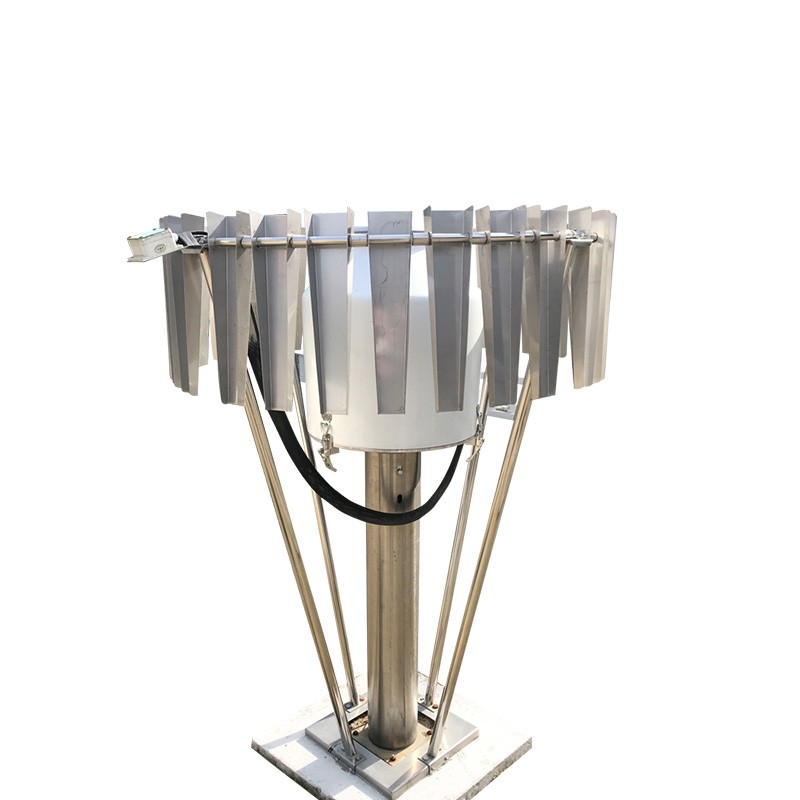
Cloudburst Weighing Precipitation Gauge utilizes a C6 high-precision weighing sensor. Its integrated, undisturbed structure eliminates the need for a windproof ring, enabling the measurement of various types of precipitation, including rain, snow, and hail. The full-range accuracy reaches ±0.1mm, making it suitable for automatic precipitation monitoring in windy environments.
Cloudburst Weighing Precipitation Gauge achieves accurate monitoring of all types of precipitation based on the weighing principle. The device uses a C6 high-precision sensor to collect precipitation weight. Precipitation depth data is derived through conversion formulas between precipitation weight, water density, and catchment area. It can perform unified measurement of liquid precipitation, solid snowfall, hail, and mixed solid-liquid precipitation. Unlike traditional tipping bucket rain gauges, this product adopts a wind-resistant integrated, undisturbed structure. The entire unit does not require an additional windproof ring. Its structure guides surrounding airflow, reducing the decrease in precipitation capture rate caused by strong winds. It is suitable for monitoring sites with high winds, such as windy areas, high-altitude mountainous regions, and coastal open fields.
The inner diameter of the Cloudburst Weighing Precipitation Gauge water inlet is strictly controlled at Ø200 (0~+0.06) mm, and the cutting edge angle is set to 42°-45°. This effectively avoids data loss caused by rainwater splashing and ensures the integrity and reliability of rainwater samples entering the catchment area. The rainfall intensity measurement range covers 0~100.00mm/min (0~6000.00mm/h), with a resolution of 0.01mm and a stable measurement accuracy of ±0.1mm across the entire range. It can simultaneously capture both light drizzle and extreme heavy rainfall events. Real-time cumulative rainfall measurement supports multiple range specifications of 1000mm, 1500mm, and 1800mm, allowing for flexible selection based on the actual rainfall conditions of the project.
The Cloudburst Weighing Precipitation Gauge unit adopts a separate inner and outer barrel structure with independent grounding. The high-strength stainless steel outer barrel isolates external interference factors such as strong winds, vibrations, and dust, ensuring stable operation of the internal weighing sensor unit and reducing measurement drift caused by environmental vibrations. The equipment has no easily damaged mechanical flipping parts, resulting in a low overall failure rate and minimal routine maintenance. It can perform continuous, uninterrupted automatic field monitoring operations.
Cloudburst Weighing Precipitation Gauge can output continuous and complete precipitation process data, suitable for multiple industries such as meteorological observation, hydrological forecasting, flash flood warning, and ecological environment monitoring. It solves the practical problems of high difficulty and large measurement errors in solid precipitation monitoring in windy areas, providing a stable and reliable data source for all-weather precipitation monitoring at field stations.
Firefighting infrared thermal imagers are suitable for dense smoke and dark fire environments. Relying on comprehensive functions, they search for trapped personnel and locate concealed fire sources. Reliable hardware parameters ensure the smooth progress of various emergency search and rescue...
An air quality monitoring station is an unmanned environmental monitoring device that integrates data collection, storage, transmission, and management. Its core advantage lies in its ability to conduct high-precision, real-time monitoring of various pollutants. The system can provide data on parame...
The standout advantage of the Portable Weather Station is its "portability," a feature directly reflected in its name. Compared with traditional fixed meteorological monitoring equipment, it has a significantly smaller size and lighter weight, with its overall design fully considering the...
The FT-WQX6 Micro Weather Sensor is a multi-functional automatic weather station developed by our company, leveraging years of experience in meteorological product development and addressing practical on-site application requirements. It directly integrates six key meteorological elements: temperatu...


 Skype
Skype
 whatsapp
 mail
mail