Tianyi Sensor IOT Technology Co., Ltd
Sales Manager:Ms. Emily Wang
Cel,Whatsapp,Wechat:+86 15898932201
Email:info@fengtutec.com
Add:No. 155 Optoelectronic Industry Accelerator, Gaoxin District, Weifang, Shandong, China


Sales Manager:Ms. Emily Wang
Cel,Whatsapp,Wechat:+86 15898932201
Email:info@fengtutec.com
Add:No. 155 Optoelectronic Industry Accelerator, Gaoxin District, Weifang, Shandong, China
time:2026-05-19 11:22:36 source:Weather Station viewed:170 time
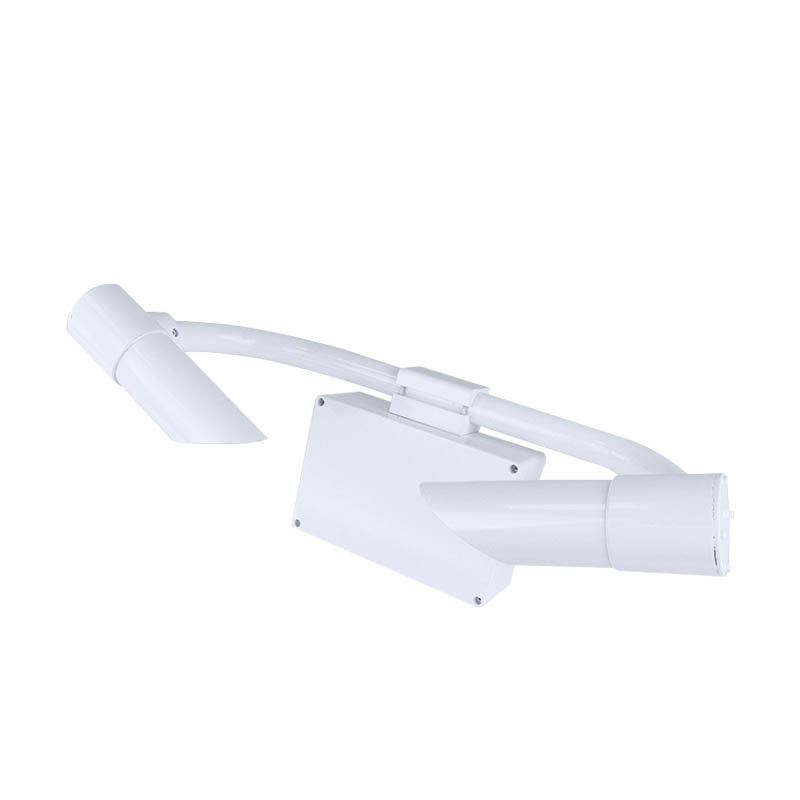
Visibility detector uses forward scattering to measure the total extinction coefficient of air and calculate current visibility. It can identify weather phenomena such as fog, rain, snow, mixed precipitation, and clear skies, with a recognition rate of no less than 95%. It is suitable for industries such as road traffic and meteorology.
Visibility detector is an instrument for automatically monitoring atmospheric visibility and weather phenomena based on the principle of optical forward scattering. The device uses forward scattering to emit an infrared pulse beam into the atmosphere. By receiving the intensity of the scattered light at a certain angle to the emission direction, and combining Mie scattering theory and Koschmieder's law, real-time visibility data is derived. When the number of suspended particles in the air, such as fog droplets, raindrops, or haze particles, increases, the intensity of scattered light increases accordingly, and the sensor calculates the current visibility value based on this. This principle utilizes the characteristic that atmospheric absorption of light in the visible and near-infrared bands is negligible; therefore, extinction is mainly determined by the scattering of light by atmospheric particles.
In weather phenomenon identification, Visibility detector distinguishes weather types by analyzing the differences in light scattering characteristics of different precipitation particles. The equipment utilizes scattering signals and settling velocity characteristics to effectively identify the type of settling particles and interpret weather conditions. Models with weather phenomenon identification capabilities can output weather phenomena such as fog, rain, snow, mixed precipitation, and clear skies, with a recognition rate exceeding 95%. Some models employ a multi-sensor fusion scheme, consisting of a scattering visibility meter and a precipitation detection system sensor. Combined with data from sensors such as temperature, humidity, wind direction, and wind speed, multivariate logic analysis can determine complex weather phenomena such as fog, haze, and sandstorms.
Visibility detector is widely used in road traffic and meteorology. On highways, the equipment is used for low visibility warnings, assisting traffic management departments in implementing safety measures such as speed limits and road closures. In meteorological stations, the equipment can be used independently or in conjunction with automatic weather stations to achieve continuous automated observation of visibility and weather phenomena. Airports, ports, wind power stations, and maritime platforms are also important application scenarios for this equipment. Many products comply with ICAO and CAA standards, meeting the technical requirements of the International Civil Aviation Organization for airport visibility measurement.
In terms of product design, Visibility detector generally uses high-quality aluminum housings, which are anodized and painted to provide waterproof, dustproof, and impact-resistant performance. The transmitting and receiving lenses are designed to face downwards, reducing interference from sunlight and other stray light, while also minimizing the impact of snow accumulation on the optical system. The equipment uses a wide voltage power supply of 12V to 24V, with a total power consumption of approximately 1W, and can be powered by solar panels and batteries for extended periods. The communication interface is RS485 or RS232, using the standard MODBUS protocol, supporting visibility value output at 15-second, 1-minute, and 10-minute time intervals. Installation height is typically between 1.5 meters and 3 meters, requiring an open, flat, and unobstructed location, with the receiver facing away from strong light sources. The equipment complies with the QX/T 536-2020 test method for forward-scattering visibility meters, ensuring the reliability and industry consistency of the measurement data.
The IV curve, or current-voltage curve, visually demonstrates the current output of a photovoltaic (PV) cell or module at different voltages. Through this curve, core parameters such as open-circuit voltage, short-circuit current, and maximum power point can be obtained. These parameters are crucial...
Miniature rain gauge is a device that uses a PVDF piezoelectric film as the core rain-sensing component and integrates an embedded AI neural network algorithm to distinguish raindrop signals. It can remotely measure precipitation, precipitation intensity, and the start and end times of rainfall, achieving real-time and accurate measurement. It is widely used in meteorological monitoring and agricultural irrigation....
This fully automated online hydrological monitoring device, based on K-band planar radar technology, can simultaneously measure water level, flow velocity, flow rate, and rainfall. Employing a non-contact measurement method, it is unaffected by silt and sewage corrosion. Its built-in intellige...
Facility agriculture refers to an agricultural form that utilizes new production equipment, modern agricultural engineering technologies, and management techniques to regulate environmental parameter factors such as temperature, light, water, soil, air, and fertilizer for the growth of plants like v...


 Skype
Skype
 whatsapp
 mail
mail