Tianyi Sensor IOT Technology Co., Ltd
Sales Manager:Ms. Emily Wang
Cel,Whatsapp,Wechat:+86 15898932201
Email:info@fengtutec.com
Add:No. 155 Optoelectronic Industry Accelerator, Gaoxin District, Weifang, Shandong, China


Sales Manager:Ms. Emily Wang
Cel,Whatsapp,Wechat:+86 15898932201
Email:info@fengtutec.com
Add:No. 155 Optoelectronic Industry Accelerator, Gaoxin District, Weifang, Shandong, China
time:2026-08-17 11:23:03 source:Weather Station viewed:40 time
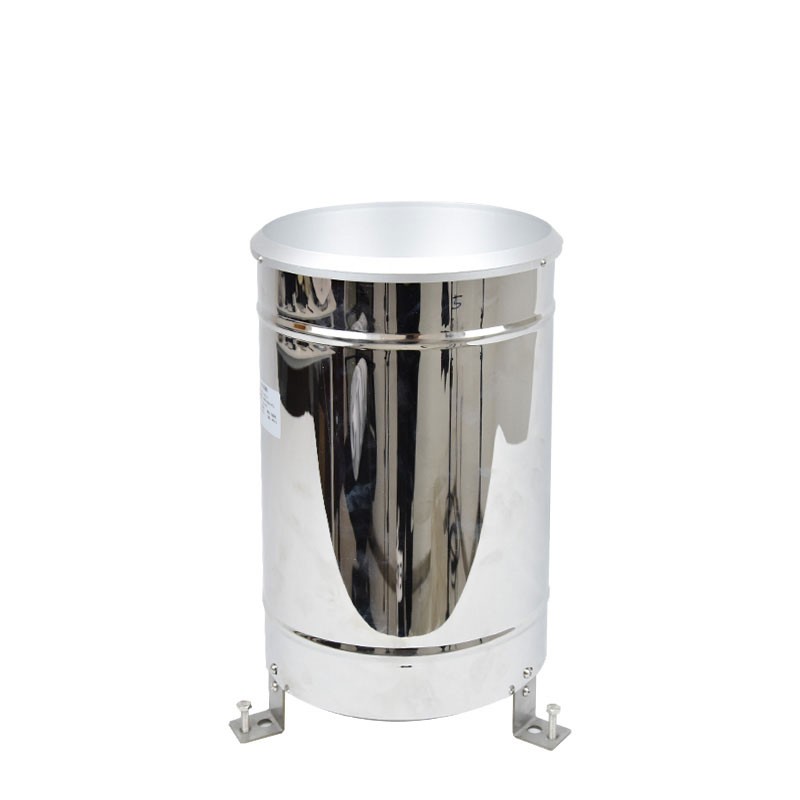
rainfall measuring equipment has a 200mm diameter drum and uses a mechanical tipping bucket combined with electromagnetic induction to collect rainfall data. It has a resolution of 0.2mm, a measurement error of ≤±2%, supports Modbus 485 output, and can monitor rainfall of varying intensities in environments ranging from 0-50℃.
rainfall measuring equipment, relying on mechanical induction for high-precision real-time precipitation monitoring, is a commonly used automated monitoring device in hydrological and meteorological projects. The overall diameter of the rain-collecting drum is Φ200mm. It employs a mature tipping bucket structure combined with electromagnetic induction elements to collect rainfall data. After rainwater enters the instrument, it flows into two equal-volume measuring chambers on both sides. When the water volume reaches a certain value, the tipping bucket flips, and the magnet synchronously triggers the induction element, generating a corresponding rainfall signal. This cycle continuously monitors rainfall, ultimately converting the physical rainfall data into digital data for output.
The rainfall measuring equipment instrument is adaptable to most outdoor working environments, operating within a temperature range of 0℃ to 50℃. The ambient humidity must be maintained below 95% without condensation to prevent moisture accumulation from affecting the normal operation of internal electronic components. The instrument has a basic resolution of 0.2mm and an overall measurement error of no more than ±2%. It can cover different levels of rainfall conditions, with a standard rainfall intensity monitoring range of 0-4mm/min and a short-duration heavy rainfall intensity range of 0-10mm/min. It also has short-duration extreme rainfall intensity limits of 8mm/min and 15mm/min, enabling it to handle rainfall data collection tasks during heavy rain and reducing data loss issues in heavy rain situations.
The rainfall measuring equipment uses Modbus 485 as its data output method, ensuring strong signal transmission stability. It can directly connect to various data acquisition terminals and monitoring platforms, allowing staff to remotely view real-time rainfall, cumulative rainfall, and other monitoring data without the need for regular on-site manual data readings. Stable data output capability also reduces the difficulty of setting up the entire monitoring system later, facilitating integration with other sensors such as water level and soil moisture sensors to form an integrated monitoring station.
rainfall measuring equipment can be applied in various scenarios such as urban flood control, reservoir hydrological monitoring, agricultural meteorological observation, and outdoor scientific research stations. Regular cleaning of the filter screen and periodic calibration of the tipping bucket's balance will ensure stable measurement accuracy over the long term, providing reliable data support for various precipitation-related monitoring tasks.
The integrated weather station is a highly integrated, low-power, and quickly installable high-precision automatic meteorological observation device. It employs a twelve-element integrated sensor to monitor meteorological elements such as wind speed, wind direction, temperature, humidity, air...
Underwater Rescue Robot is equipped with a high-definition camera and imaging sonar, capable of transmitting real-time underwater footage back to the surface control station via either tethered or autonomous modes. With a maximum operational depth exceeding 300 meters, and outfitted with light...
Traditional air quality monitoring stations (national and provincial control points) use extremely sophisticated and expensive equipment, resulting in very high construction and operational costs. Consequently, a city typically has only a handful of such stations. Due to the limited number of statio...
The FT - WQX9 Outdoor Weather Sensors are common devices in the field of meteorological monitoring. Integrating multiple sensors, they can accurately measure data such as wind speed, wind direction, temperature, humidity, air pressure, PM2.5, PM10, rainfall, and solar radiation, providing real - tim...



 Skype
 whatsapp
 mail